
How to Choose Finishes for a New Home (Without Regretting Them Later)

Inside: Feeling overwhelmed by all the decisions in a new home build? Here’s how to choose flooring, cabinetry, countertops, tile, and other finishes that work together and give you flexibility for years to come.

This post contains Amazon and other affiliate links for your convenience. As an Amazon Associate I earn from qualifying purchases. If you purchase something through any link, I may receive a small commission, at no extra charge to you. I only recommend products that I love or would purchase for myself. See my full disclosure here.
Building a new home is thrilling. You think, “I’m going to get exactly what I’ve always wanted in my home!”
Then it comes time to start making the actual selections and that excitement is replaced with anxiety and overwhelm. Does this go with that? What if I make a mistake? What do I even like anymore?
People spend months thinking about the lot, the location, the floorplan, and the layout, then suddenly find themselves sitting in a design center trying to choose dozens of finishes in just a few days.
Flooring. Countertops. Tile. Lighting. Hardware. Plumbing fixtures. Paint colors.🤯
Individually, none of those decisions seem like a big deal. Put them all together and it’s easy to start second-guessing everything. And most people aren’t actually afraid of making a bad choice. They’re afraid of making an expensive choice they’ll be tired of a few years later.
All of these choices should be part of the fun. But for overthinkers like me, this much freedom can trigger a serious case of decision paralysis. Give me three flooring samples and I’m fine. Give me thirty and somehow the decision gets harder instead of easier.
That’s why I think it helps to have a plan before you ever walk into a design center. Not because every decision has to be perfect, but because a few simple guidelines can make the process feel a lot less overwhelming.
Building a home comes with hundreds of decisions, and they all seem important in the moment. This New Home Build Series walks through the ones that can have the biggest impact long after move-in day.
- Part 1: (This post) How to Choose Finishes for a New Home (Without Regretting Them Later)
- Part 2: 15 New Home Design Regrets to Avoid Before You Build
- Part 3: Builder Upgrades Worth Paying For (And Which Ones Can Wait)
How Do You Choose Finishes for a New Home Without Regretting Them Later?
The easiest way to avoid regret is to choose finishes based on how you want to live in the home, not just what looks good on a sample board. Focus first on the permanent finishes that are hardest to change and choose options that give you flexibility as your decorating style evolves over time.
One thing that helps is deciding how you want the house to feel before you start choosing individual finishes.
Choosing finishes without a plan is a little like grocery shopping when you’re hungry. Everything looks good. One cabinet color catches your eye. Then a tile. Then a light fixture. Before long, you’re trying to make dozens of decisions without a clear direction for where you’re headed.

Before choosing a single fixture or finish, take a step back and think about how you want the finished home to feel. You don’t need a perfectly defined decorating style, but having a general direction makes every other decision easier.
For example, do you want it to feel:
- Light and airy?
- Cozy and moody?
- Contemporary?
- Traditional?
- Rustic casual?
- Collected and layered?
When you’re sitting in a design center looking at hundreds of options, that vision becomes a filter. Instead of asking, “Do I like this?” you start asking, “Does this fit the feeling I want for my home?”
Once you’ve established that overall direction, it’s time to start making selections, beginning with the finishes that have the biggest impact and are the most difficult to change later.
Start With Flooring.
Once you have a general vision for how you want the house to feel, start with the flooring.
Flooring connects most of the rooms in a home and influences nearly every other selection that follows. It also tends to be one of the most expensive and difficult finishes to change later, which is why I think it deserves extra attention.
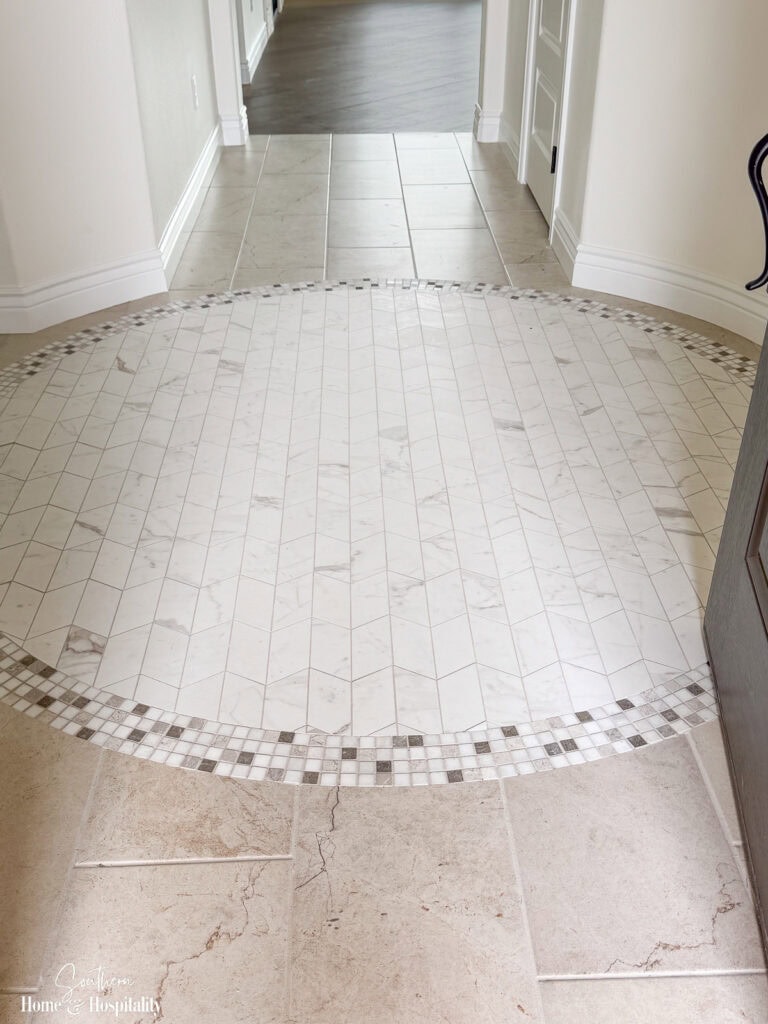
As you’re comparing options, ask yourself:
- Does this floor lean warm, cool, or neutral?
- Will it work with a variety of furniture styles?
- Will it still work if I repaint later?
- Does it coordinate with nearby tile selections?
- Is it durable and realistic for how we live?
- Will it show everyday dust and dirt?
Flooring doesn’t have to be the most exciting choice in the house. In fact, I think it works better when it isn’t. A floor that plays well with lots of different decorating styles gives you more freedom later. That’s one reason I tend to be cautious about flooring that feels too warm, too gray, too light, or too dark.
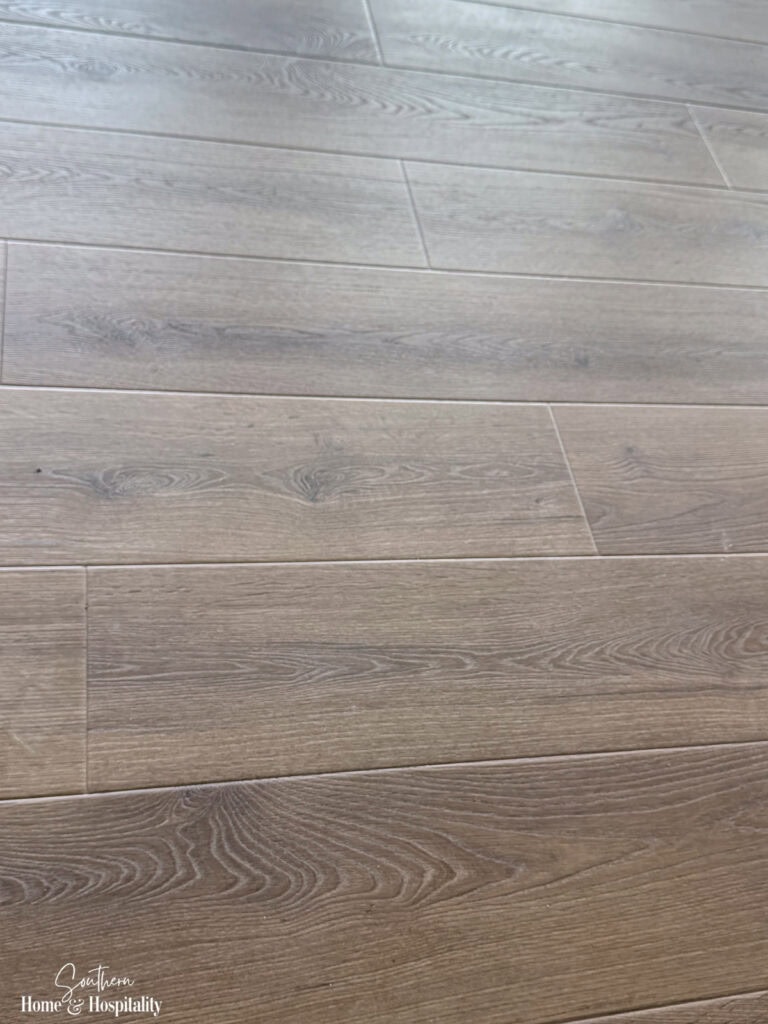
When I helped a friend choose flooring for this new home, I encouraged her to look for something as neutral as possible. At the time, we were looking at small samples under showroom lighting, which can make it hard to picture the finished result. When I recently walked through the completed house, I was so happy with how the floors turned out! The wood and the tile were the perfect neutrals with no unexpected undertones, and they work beautifully with the cabinetry, countertops, and wall tile selections throughout the home.
That experience reinforced something I’ve believed for a long time: the best flooring supports everything around it instead of competing for attention.
SH&H Tip: If you’re choosing flooring for a new home build, try to think beyond today’s furniture and paint colors. The more neutral and adaptable the flooring, the easier it will be to update your decorating style over the years without feeling like the house is fighting you.
Choose Cabinetry for the Long Haul.
After flooring, I would turn my attention to the cabinets.
Cabinets take up a lot of visual space, especially in kitchens and bathrooms. Unlike paint or hardware, they’re also more expensive and time-consuming to change later, which makes them one of the most important decisions in the entire building process.
When evaluating cabinet colors, ask yourself:
- Will I still like this color in five or ten years?
- Does it work with my flooring and countertops?
- Will it limit future decorating choices?
- Does it fit the overall feeling I want for the house?

Cabinet style matters too. Trendy door profiles can date a kitchen just as quickly as a trendy color. If you’re planning to stay in the home for a long time, it usually helps to lean toward styles that are more timeless rather than whatever is having a moment right now.
One thing I appreciate about this home is that the cabinet colors add personality without commanding attention. The bathroom, laundry, and lower kitchen cabinetry all bring in color, but the shades are soft and muted.
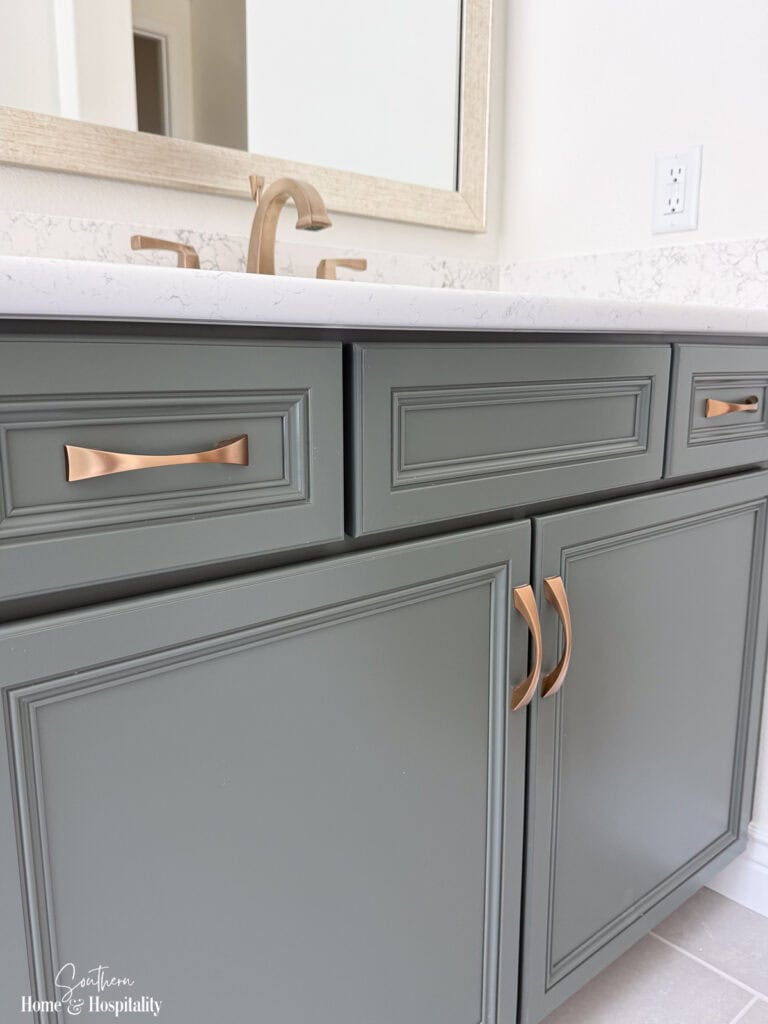
A cabinet color doesn’t necessarily have to be white to feel timeless. Sometimes a subdued blue-green or gray-blue can function almost like a neutral, especially when it’s paired with classic flooring, countertops, and hardware. Another reason I like using color on cabinetry is that it can be updated much more easily than flooring or countertops if tastes change down the road.
In trying to choose flexible finishes, the goal isn’t avoiding color altogether. It’s choosing color in a way that still leaves room for your furnishings and accessories to change over time.
SH&H Tip: If you’re torn between a classic cabinet color and a trendier one, think about how it will look after you’ve changed the wall color, bar stools, rugs, and accessories a few times. The best cabinet colors tend to work with a variety of decorating styles rather than locking you into just one.
Build From the Largest Selections Down.
Here’s where things start getting easier.
Once you’ve chosen your flooring and cabinetry, you’re no longer staring at hundreds of options with no direction. You have a foundation to work from, which makes the remaining decisions feel much more manageable. Now it’s time for countertops, tile, lighting, plumbing fixtures, hardware, and paint colors.

Instead of selecting each item independently, think of your flooring and cabinets as anchors. Every new choice should belong with the finishes you’ve already selected and the basic feel you’ve chosen for your home. Because paint is much easier to change than flooring or cabinetry, I would rather choose a paint color that works with those larger investments than the other way around.
This doesn’t mean everything has to match. In fact, homes usually feel more interesting when they don’t. You’re simply trying to create a collection of finishes that feel intentional and related when viewed together.
Pay Attention to Undertones.
This is one of those things people don’t always notice on a sample board until there’s a large expanse of it installed throughout the house.
Finishes don’t need to match perfectly, but they do need to coordinate.
For example, warm white cabinets, warm wood flooring, and brass hardware can work beautifully together because they share a similar warmth. The same is true for cooler palettes.
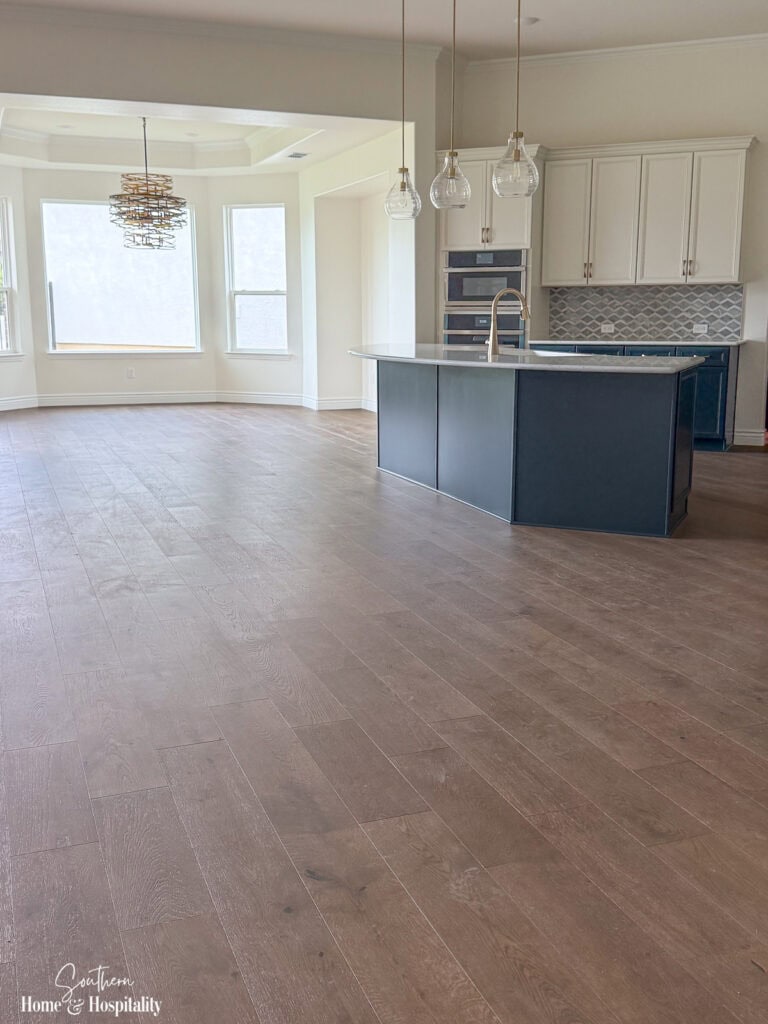
One thing I appreciated while photographing this home was how consistently the warm tones were throughout the major selections. The flooring, cabinetry, countertops, and champagne brass finishes all feel like they belong together without every room looking like a Xerox copy of each other.
Problems usually happen when selections are made one at a time without considering how they’ll relate to one another. A floor that looks perfect by itself can all of a sudden become too orange, too gray, or too yellow once it’s sitting next to cabinetry, countertops, and tile.
If possible, lay samples side by side instead of evaluating them separately. What you’re looking for isn’t an exact match. You’re simply making sure the colors and undertones don’t clash with one another.
SH&H Tip: Before making a final decision, take your flooring sample and place it next to your cabinet and countertop selections. If one finish suddenly looks much more yellow, gray, pink, or orange than it did before, the undertones may be fighting each other.
Look at Selections Together, Not One at a Time.
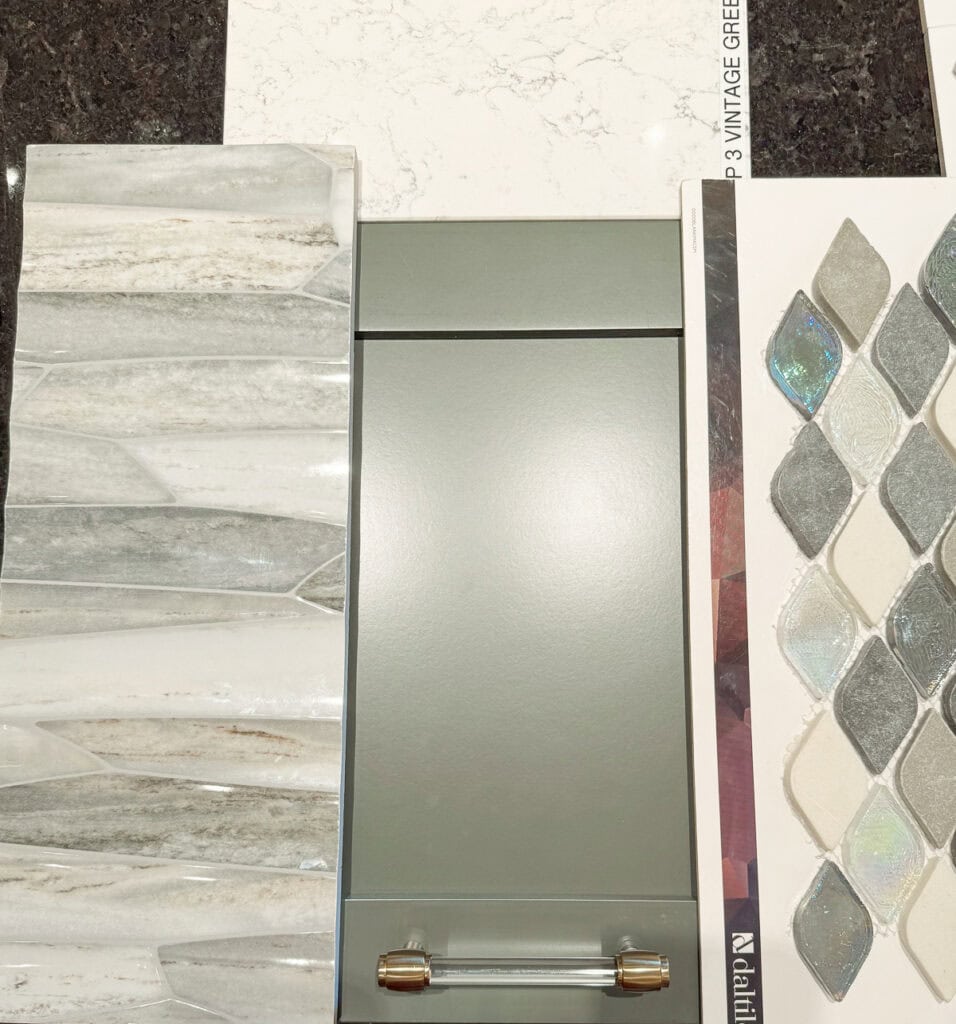
A countertop sample can look beautiful.
A flooring sample can look beautiful.
A cabinet color can look beautiful.
That doesn’t automatically mean they’ll look beautiful together.
Your home won’t be experienced one finish at a time. It will be experienced as a whole.
Once you’ve narrowed your choices, try to look at all of the major selections together. Flooring, cabinetry, countertops, tile, hardware, and lighting all influence one another.
What you’re evaluating at this point isn’t just color. You’re also looking at how much visual weight each finish carries.
For example, if you choose a heavily patterned countertop, a bold backsplash, a colorful island, and dramatic lighting, each selection may be beautiful on its own. Together they can be too much.
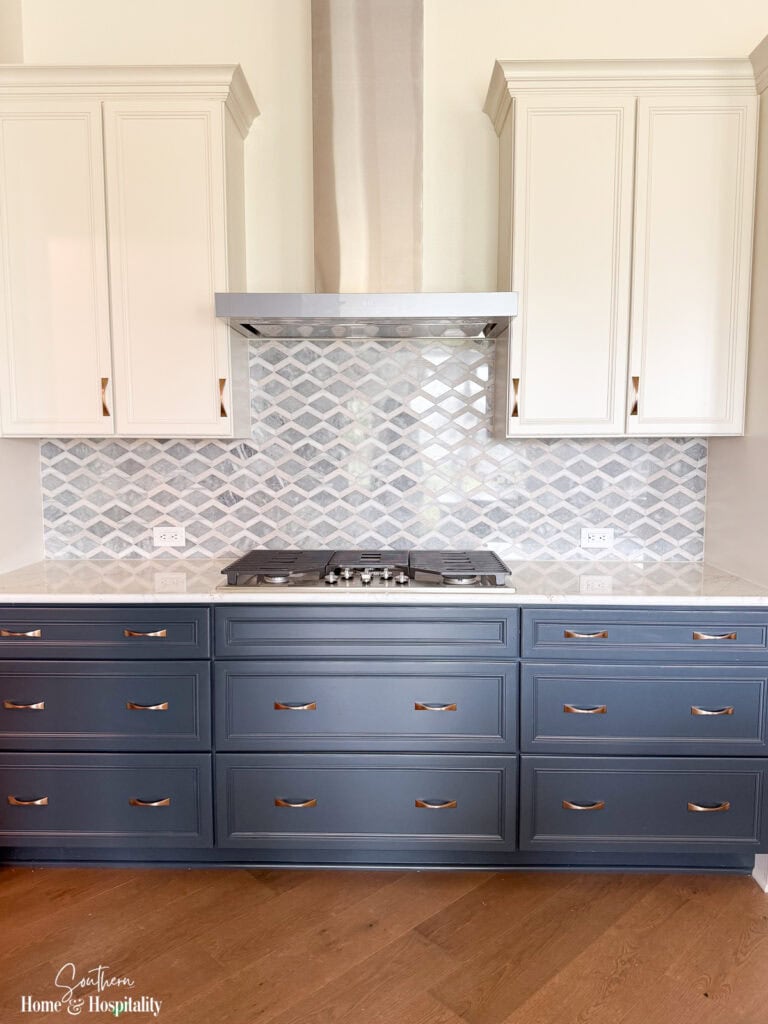
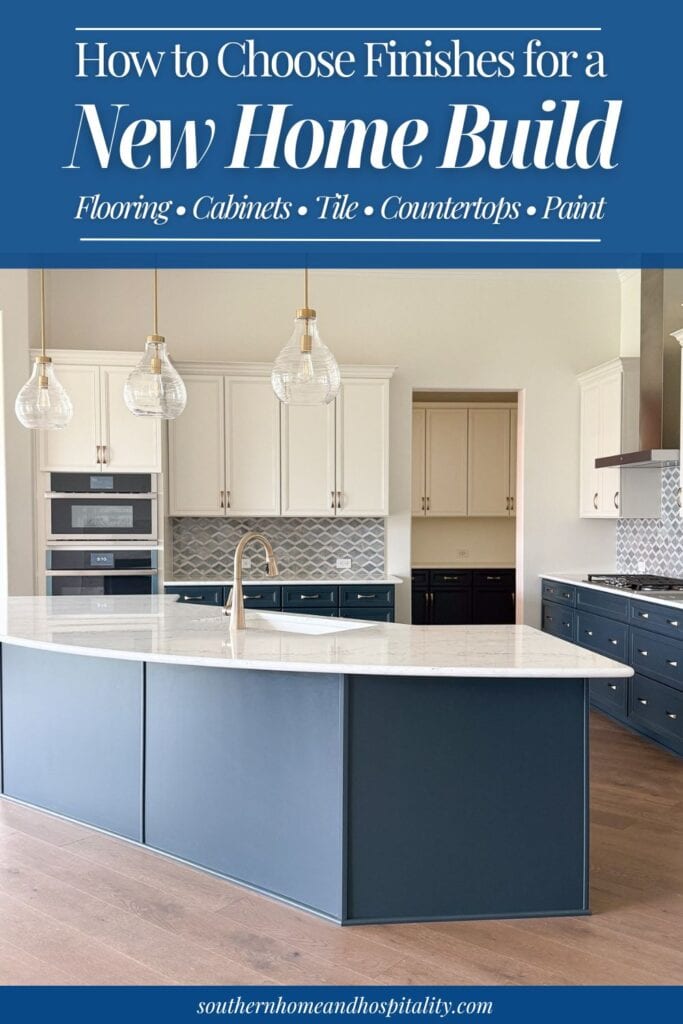
While taking the pictures in this kitchen, I found myself noticing combinations more than individual selections like we had in the design center. The lower cabinet color, flooring, backsplash, countertops, and hardware were all attractive on their own, but what really made them work was how they related to each other. No single finish dominated the room, which allowed the entire space to feel balanced.
Sometimes it helps to step back several feet or even take a photo of your samples together. Looking at them from a distance often reveals things you don’t notice when you’re focused on one small sample at a time.
SH&H Tip: If one selection immediately grabs all of your attention when it’s placed beside the others, ask yourself whether it’s meant to be the focal point. If not, it may be competing a little too hard with the rest of your selections.
Repeat Finishes Throughout the House.
A home doesn’t need to use the exact same materials in every room, but it helps when there are a few common threads tying everything together.
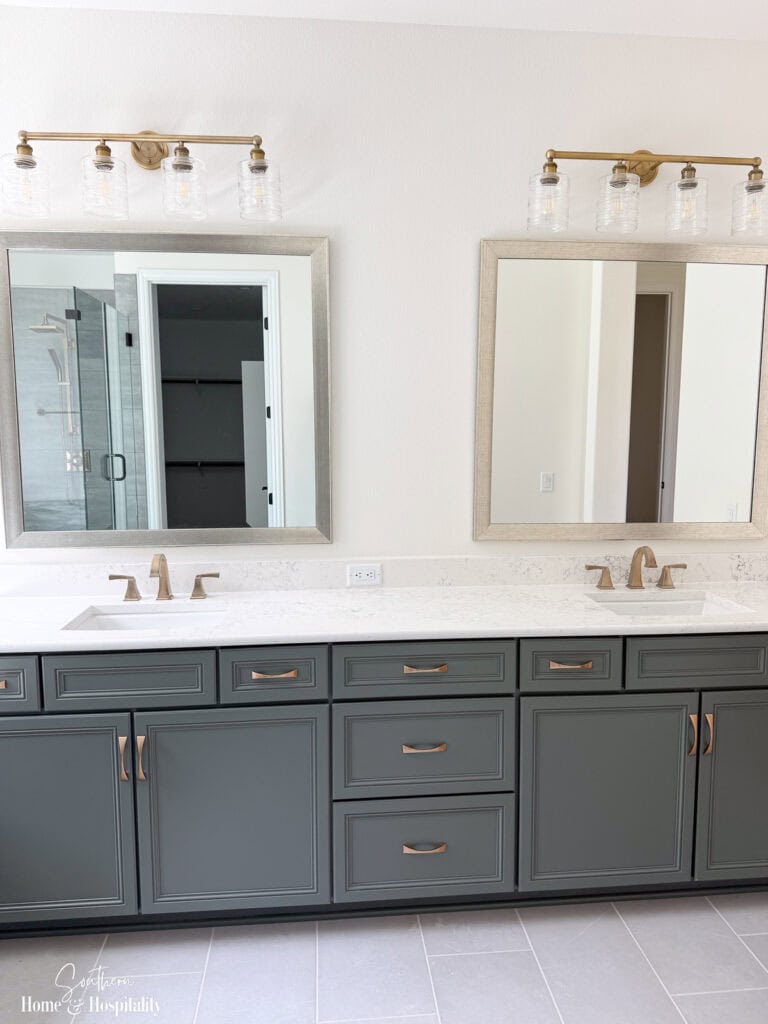
As I moved from room to room, I kept noticing the warm champagne brass finish appearing again and again. It showed up in the kitchen hardware, lighting, bathroom fixtures, and other details throughout the house. None of the rooms look identical, but seeing that finish show up over and over helps everything feel like it belongs in the same house.
The same idea applies to other selections as well. You might repeat not only a hardware finish but:
- A cabinet color family
- A flooring material
- Similar lighting finishes
- A consistent style of plumbing fixtures
You don’t need to make every room match. You just need enough continuity that the house feels connected as you move from room to room.
SH&H Tip: Before finalizing your selections, make a list of the finishes that will appear throughout the house. If you find yourself choosing a different metal finish, cabinet color, or design style in every room, it may be worth looking for a few opportunities to create more continuity.
Leave Room for Your Furniture and Decor to Shine.
When you’re building a home, it’s easy to become completely focused on the permanent finishes. Flooring, cabinetry, countertops, tile, lighting, and hardware are all important decisions, and it’s natural to spend a lot of time thinking about them.
But at some point, all of those will become a backdrop when the house is filled with furniture, rugs, artwork, lamps, window treatments, and all of the little touches that make it feel like home.
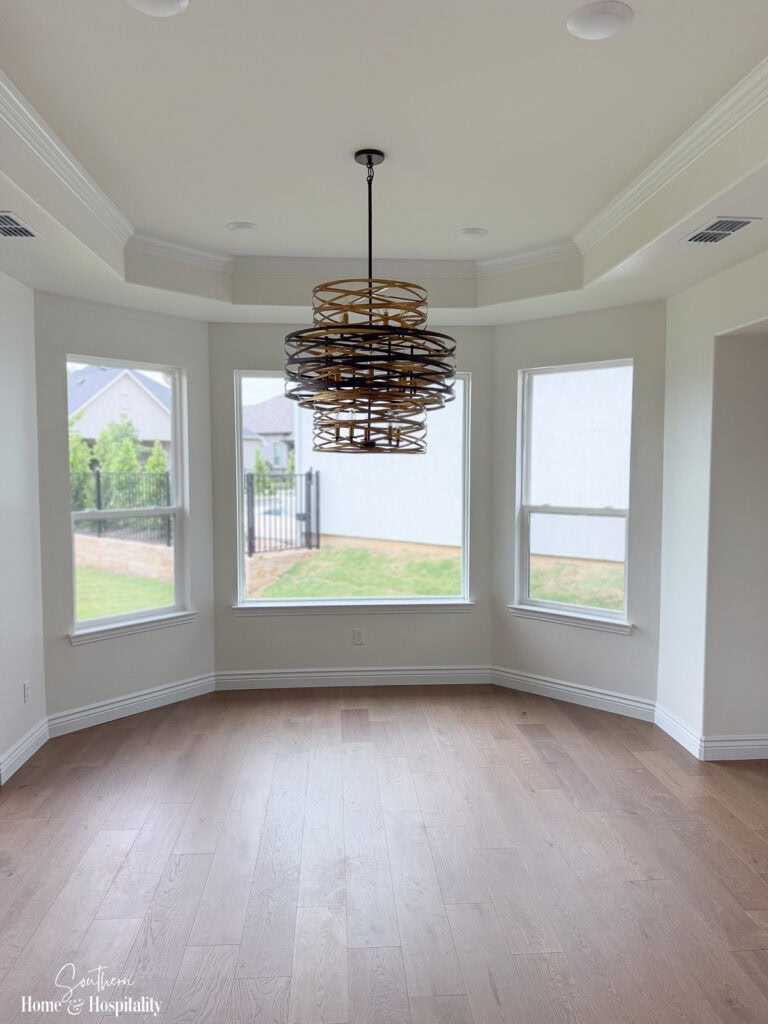
As I was walking through this house I had to remind myself of how different these rooms will look once the furniture is moved in. Standing in the empty breakfast area, it was easy to focus on the beautiful lighting, the flooring, and the huge amount of natural light coming in through the walls of windows. But once a table, chairs, barstools, accessories, and window treatments are added, those features will become only a part of a much bigger picture.
That’s one reason every permanent finish shouldn’t be the star of the show. The flooring, cabinetry, countertops, and fixtures are important, but they aren’t the only things people will notice when they walk into a room.
As you’re making selections, try to picture the rooms fully furnished rather than completely empty. The goal isn’t just to create a beautiful house on move-in day. It’s to create a home that still feels beautiful after you’ve added all the things that make it yours.
Choose What Works for Real Life.
Pretty matters. But so does everyday living.
When you’re making selections, it’s easy to fall in love with something in a showroom or on a sample board. But you have to take into account whether you’ll still be happy with that selection after living with it daily.
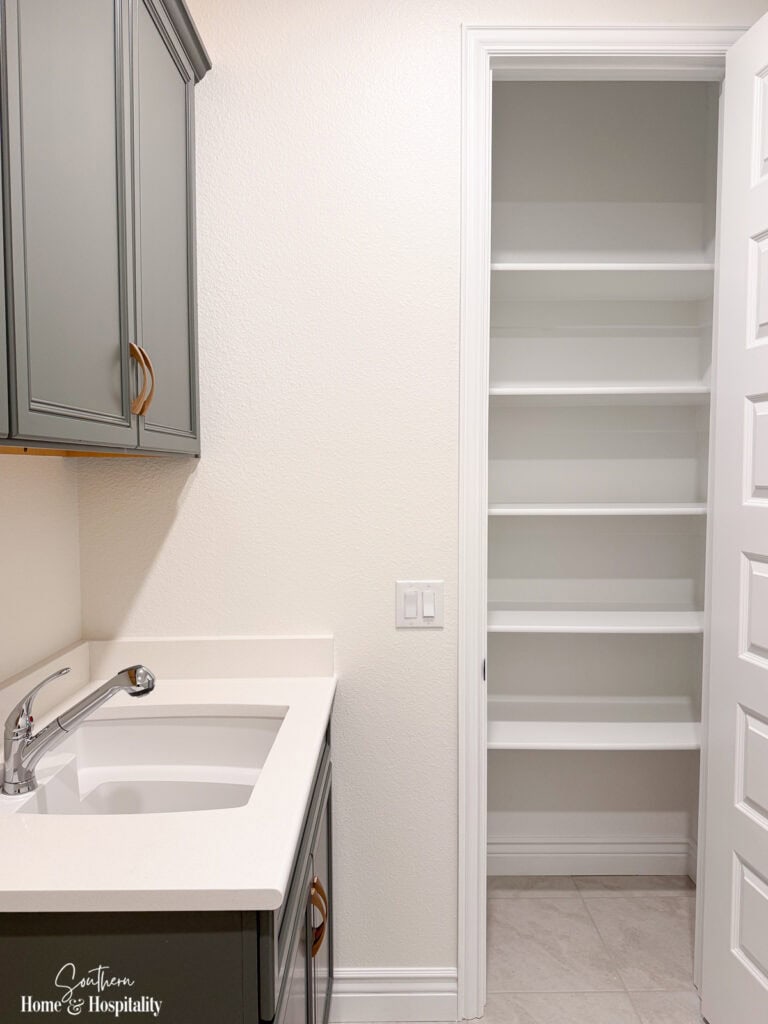
Looking beyond the pretty finishes, it was clear the homeowners were thinking about how they would actually live in this house. Functional spaces like the laundry room received just as much attention as the more visible rooms, with plenty of storage for everyday necessities. The sink was even chosen with the family dog in mind. The ledge inside allows him to stand comfortably during baths without splashing water all over the countertop.
Before making a final decision, ask yourself:
- Does it fit the way I actually live?
- Will this be easy to clean?
- Will it show dirt easily?
- Will it require special maintenance?
- How will it look after years of daily use?
That’s important because some of the decisions you appreciate most after move-in aren’t necessarily the ones that shine in photos. Storage, durable materials, practical layouts, and easy-to-maintain finishes can have just as much impact on your day-to-day happiness as a beautiful high-maintenance marble countertop.
SH&H Tip: If you’re stuck between two options, imagine cleaning, maintaining, and living with each one for the next ten years. Sometimes the best choice becomes much clearer when you think beyond move-in day.
Avoid Making Every Decision a Statement.
One of the easiest ways to create a home that feels balanced is to let a few selections take center stage while the others play a supporting role.
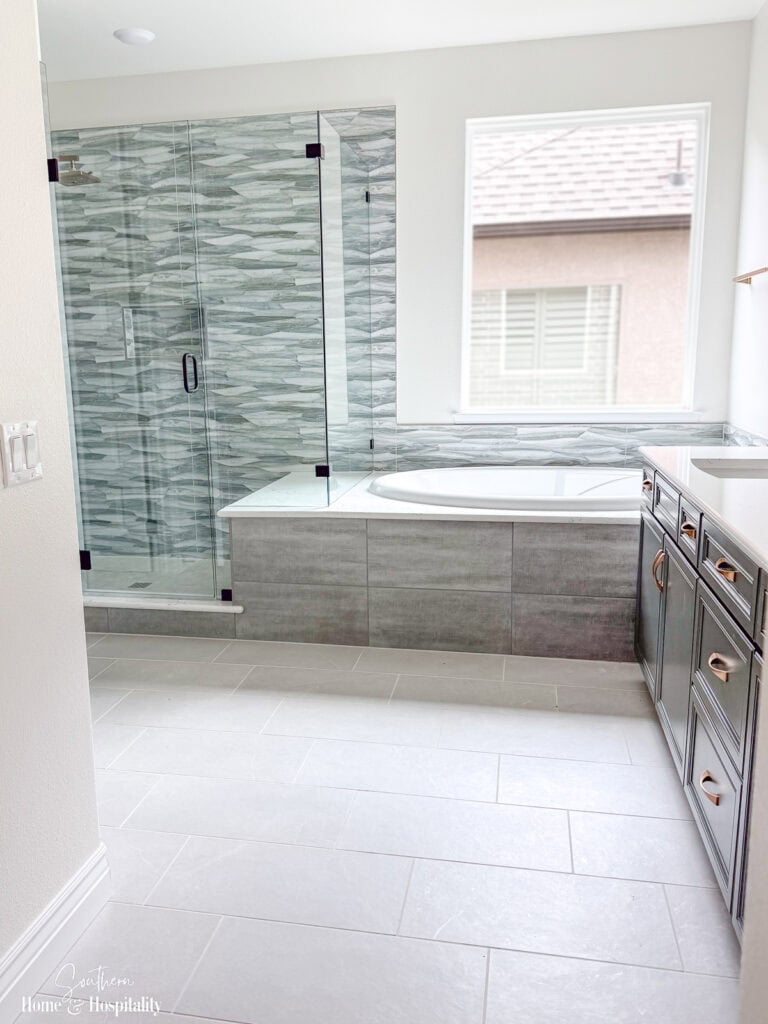
A good example is the statement tile on the shower wall in the primary bathroom of this home. It was one of the bolder choices the homeowners made and not an easy decision. They fell in love with its subtle green shades, movement, and texture, but were also afraid it might be too crazy.
Seeing it installed made it clear why it works so well. The tile naturally draws your attention, but the surrounding gray tile, light flooring, coordinating soft green vanity, and minimally-patterned white countertop don’t compete with it. They’re simple enough to let the beautiful statement tile be the focal point.
The bolder choices are often the selections that give a house personality. The key isn’t avoiding them. It’s being intentional about where you use them.
SH&H Tip: You don’t have to play it safe with every selection. Just decide where you want the eye to go first. A room usually feels more balanced when only a few things stand out and everything else supports them.
What Matters Most When Choosing Finishes for a New Home.
The most successful new home selections aren’t necessarily the trendiest ones. They’re the choices that work together, support your lifestyle, and give you flexibility as your decorating style changes over time.
Focus on creating a strong foundation rather than on every current trend. Future you will appreciate having options.
And don’t put pressure on yourself to create a perfect house. Nobody’s life was ever irreparably damaged by picking the wrong light fixture. Make choices based on what you won’t get tired of and what works for the way you live. The selection appointments eventually end. Then comes the fun part—making the house your own.

Before you go:
As always, I appreciate your visit, comments, and shares here on the blog! I’d love it if you also follow along with me on Pinterest, Instagram, Facebook, TikTok, and YouTube so you won’t miss any of my inspiration and ideas.
Don’t forget to sign up for updates to keep in touch.
If you’re not already a member of the SH&H family, I’d love to have you join me! You’ll not only get email updates, but you’ll have exclusive access to all the bonus materials in my free subscriber-only library, like this:
Pin it to remember it!
If you’ve enjoyed this post, please pin and share this on Pinterest: