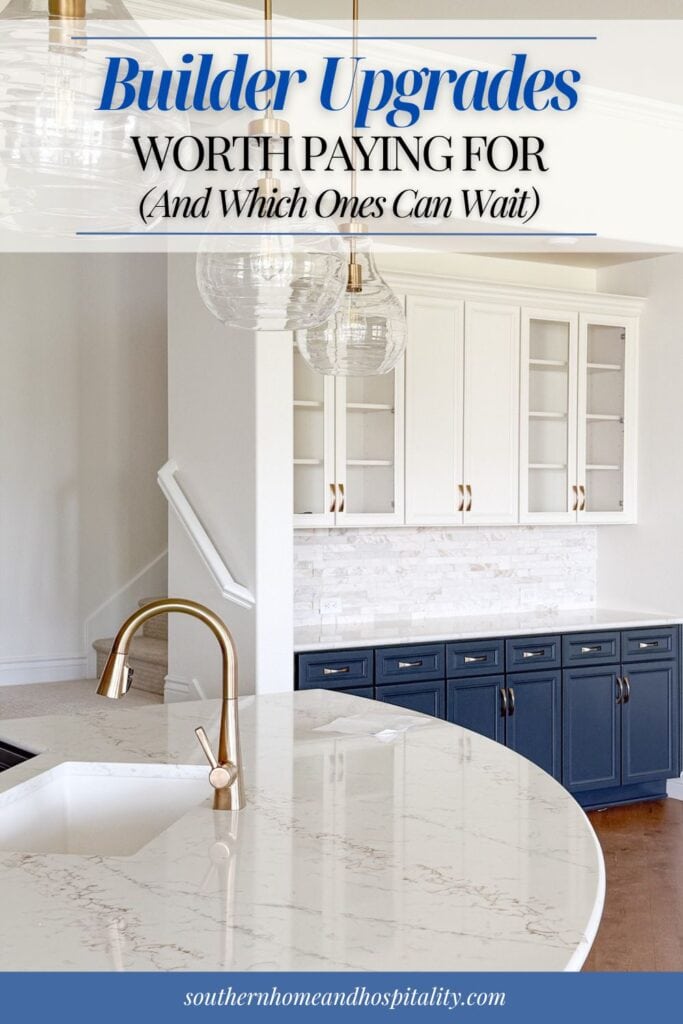

Builder Upgrades Worth Paying For (And Which Ones Can Wait)

Inside: Where should you spend your new home budget—and where can you save? Here’s how to decide what to upgrade now and what can easily wait until later.

This post contains Amazon and other affiliate links for your convenience. As an Amazon Associate I earn from qualifying purchases. If you purchase something through any link, I may receive a small commission, at no extra charge to you. I only recommend products that I love or would purchase for myself. See my full disclosure here.
When you’re building a new home, there comes a point where it feels like every sentence out of the builder’s mouth starts with, “That’ll be extra.” Before long, you’re wondering if you’re making smart investments or simply bleeding money one upgrade at a time.
The good news is you don’t have to say yes to every upgrade to end up with a home you love. If I were making those decisions, I wouldn’t be asking, “Do I want this?” I’d be asking, “How hard would this be to change later?” That one question can make the optional extras a whole lot easier.
I’ve been watching friends go through the building process recently, and it’s been interesting to see which things they’ve chosen to pay the builder for, and which ones they’re purposely saving for later. It’s also made me think about all the things I’ve changed in my own home long after moving in.
Builder Upgrades That Are Usually Worth Paying for During Construction.
If you’ve been to the builder’s design center, you’ve probably figured out they can upgrade just about everything. For a price.
The trick is knowing which upgrades become major headaches later and which ones are perfectly reasonable weekend projects after you move in.
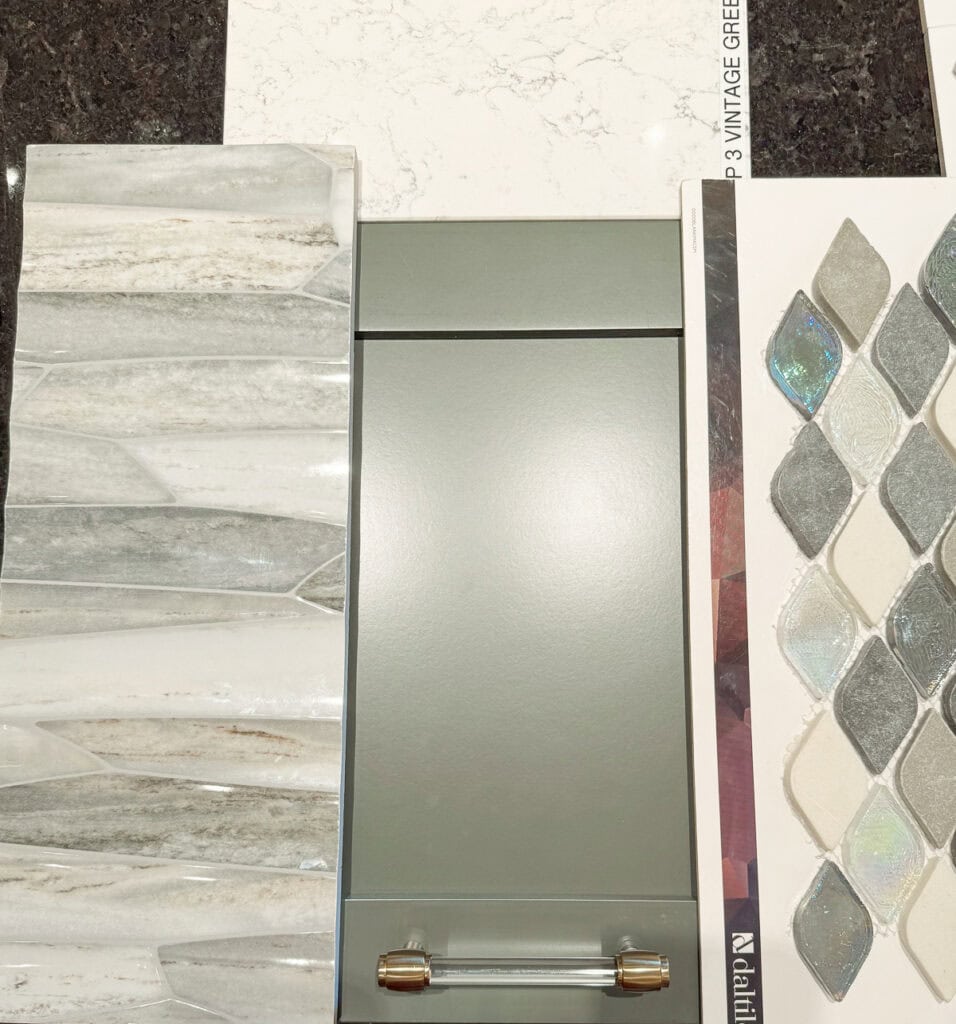
When it comes to allocating the budget, I’d put my money into the things hidden behind the walls or built into the structure of the house. Those are the projects that usually involve drywall dust, multiple contractors, and asking yourself, “Why oh why didn’t we just do this when the house was being built?”
Electrical, Plumbing, and Other Behind-the-Walls Upgrades.
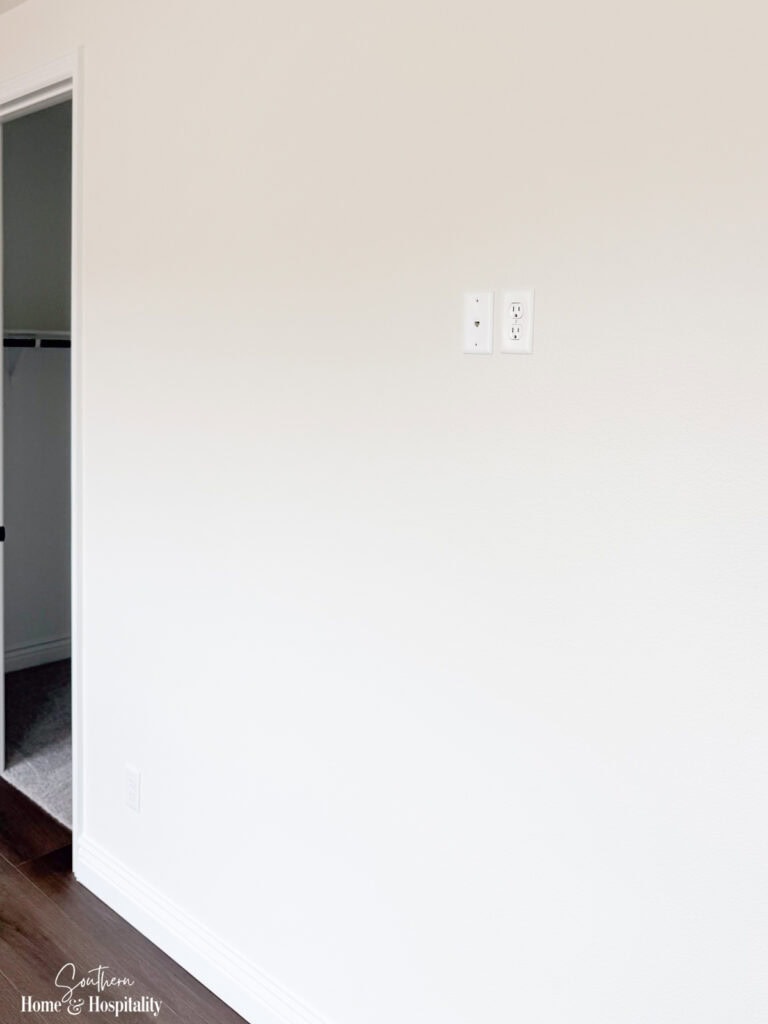
Electrical outlets, plumbing, gas lines, wiring for sconces, or even future speakers are all much easier to install while the walls are open. It’s so easy to think, We’ll add that later. You don’t think about later meaning patching drywall, repainting walls, and wishing you’d spent a little more while everything was already exposed.
If you already know you’ll eventually want an outlet in a certain spot, a gas line for an outdoor kitchen, or plumbing somewhere different than the builder plans, I’d seriously consider doing it now.
One thing that was especially smart during my friend’s recent build was having the forethought to have a few outlets moved in the original floorplan because they knew they’d end up hidden behind heavy furniture. That’s the kind of detail you usually won’t notice until you’re living there.
Things to think about:
- Extra or relocated electrical outlets
- Floor outlets for floating furniture arrangements
- Plumbing for a future sink, bar, or laundry area
- Gas lines for a fireplace, range, or outdoor kitchen
- Wiring for sconces, speakers, security cameras, or TVs
- Under-cabinet lighting and other hardwired lighting
- Additional hose bibs or outdoor plumbing
Structural and Layout Changes.
Paint colors are easy to change. Walls…not so much.
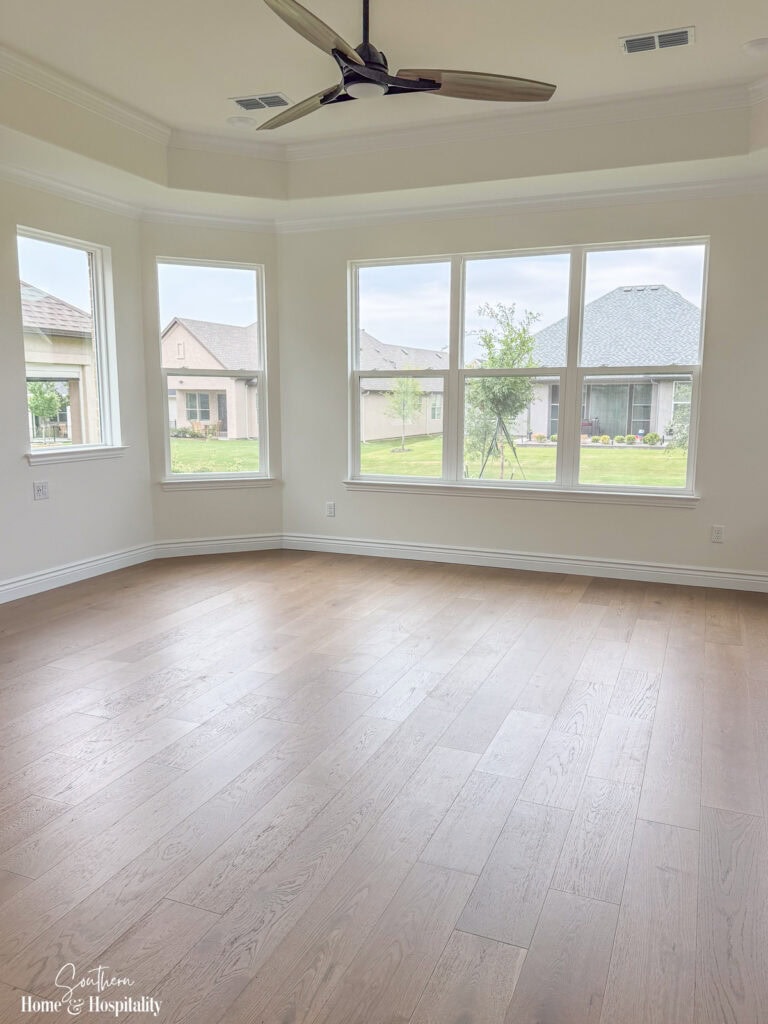
If you’re thinking about enlarging the pantry, extending the patio, widening a doorway, adding larger windows, or changing the layout of a room, those are the kinds of decisions I’d think long and hard about before passing on.
When it comes to structural changes, I’d ask myself one simple question: If I don’t do this now, will I realistically ever do it?
If the honest answer is no and it’s something you truly want, I’d probably find somewhere else to trim the budget instead.
I’ve swapped out many a light fixture, painted rooms, and changed cabinet hardware many times over the years. I’ve only once felt it was worth it to move a wall. That was during a major remodel…and it was a dusty, inconveniencing pain in the rear.
Things to think about:
- Enlarging a pantry or closet
- Extending a patio or covered outdoor area
- Larger or additional windows
- Wider doorways
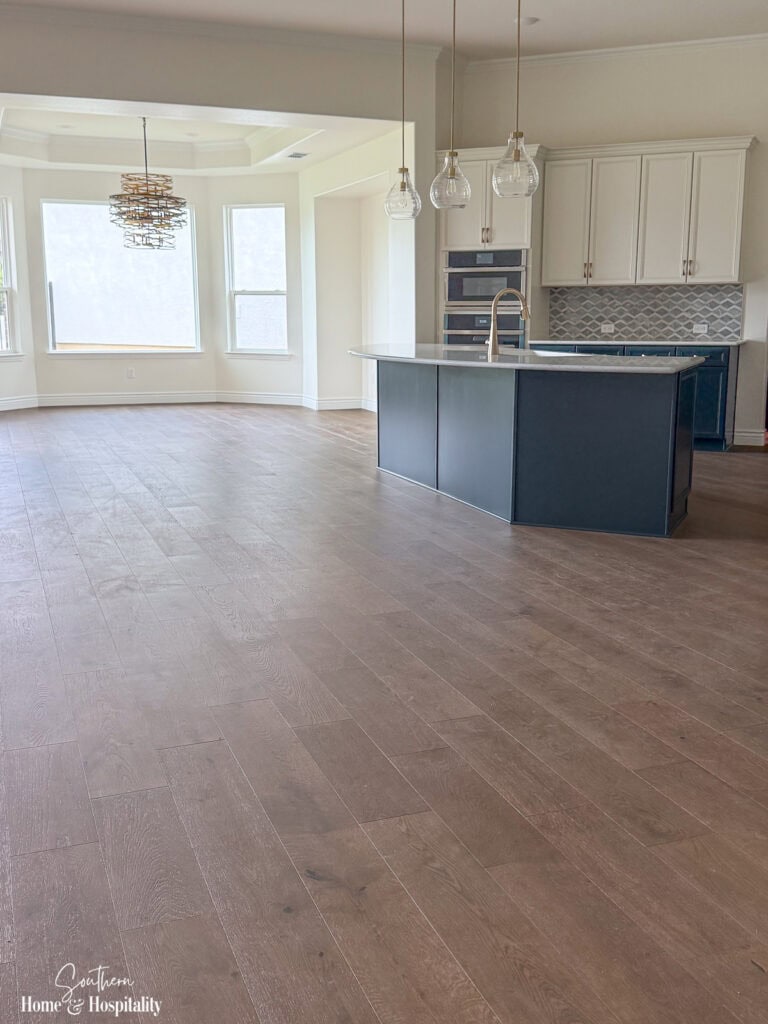
- Changes to the kitchen island
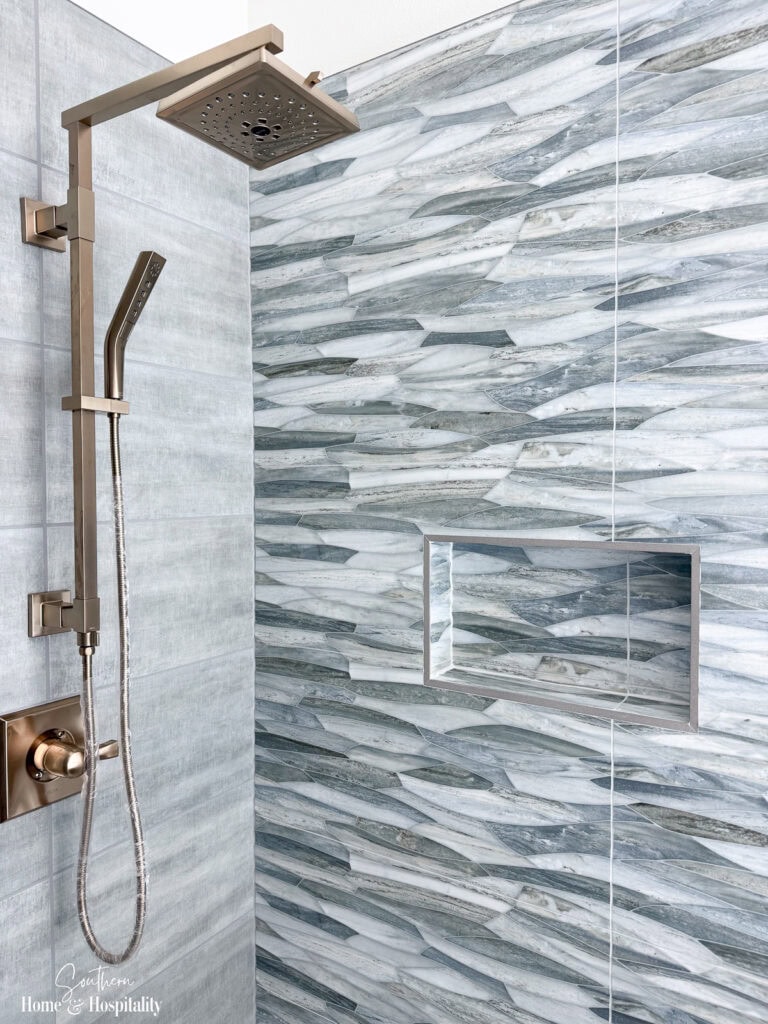
- Shower size, bench, or niche changes
- Ceiling-height or tray-ceiling changes
- Attic access or additional storage
Future Upgrades to Plan for Now.
It’s easy to focus on the finish line—that finally finished brand spanking new house. But I’d also spend a little time thinking about what life in the house will look like a few years from now.
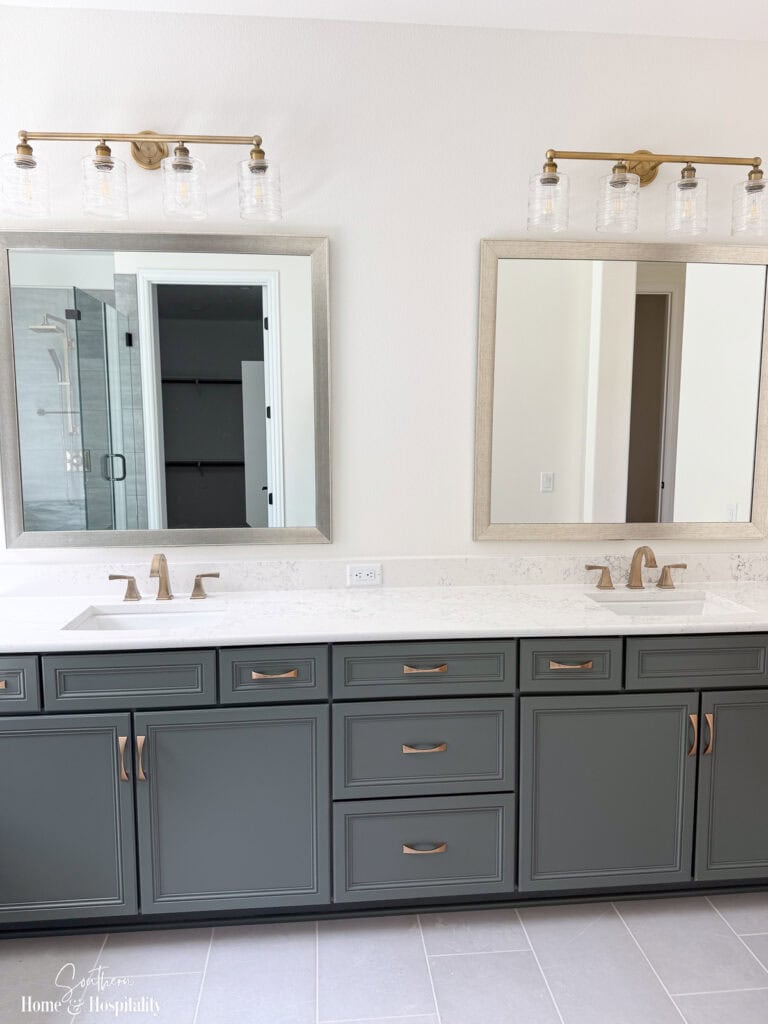
The best example of thinking ahead I saw during my friend’s build was a simple one. They had the builder install an electrical outlet behind the middle section of the primary bathroom vanity they already knew would eventually become a sit-down makeup area. They’ll have a carpenter take out those two drawers, but no hole in the wall or electrician will be required.
The same thinking applies to anything you know you may add later—a wall-mounted TV, outdoor kitchen, surround sound speakers, electric car charger, extra refrigerator, or other project that will be much easier if the wiring, plumbing, or support is already in place.
Builder Upgrades That Are Often Better to Do After Closing.
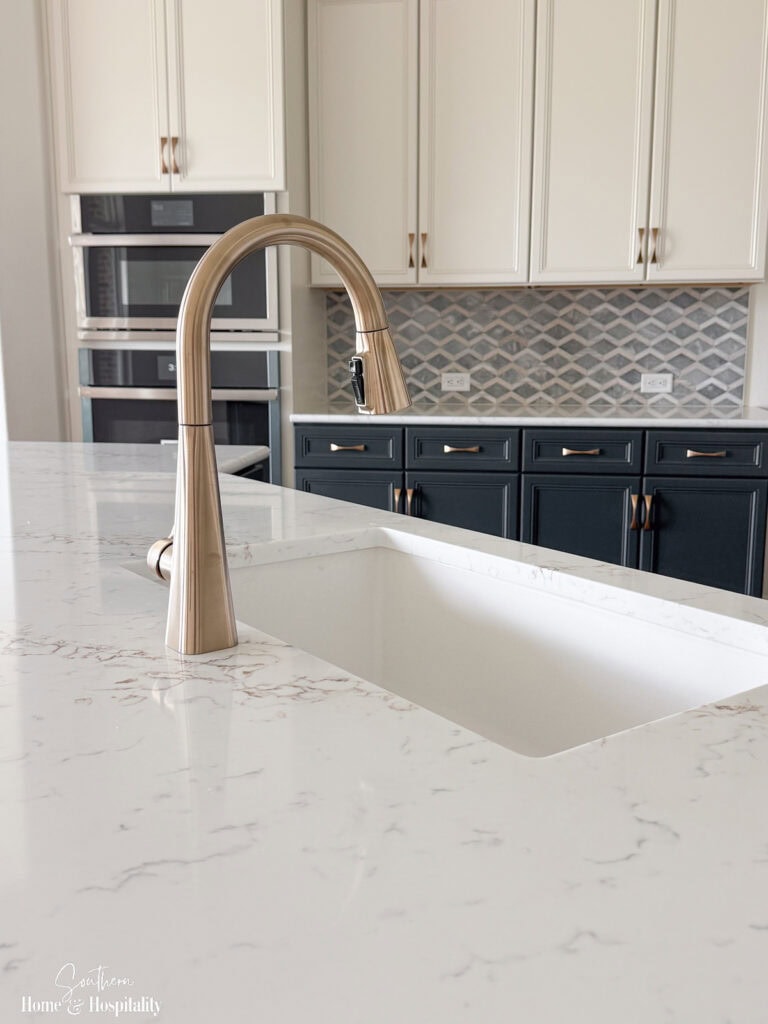
Here’s the part that’s good for both your budget and your sanity. Not everything has to be decided before closing.
In fact, some of the upgrades builders charge the most for are also some of the easiest things to personalize later. Waiting often gives you more choices, better prices, and a chance to live in the house before deciding what really fits your style.
Sometimes the builder’s options just aren’t you—and that’s perfectly okay. Waiting isn’t always about saving money. It’s about giving yourself the freedom to personalize your home instead of choosing from a short list of builder options.
Decorative Mirrors.
If your builder allows it, upgraded mirrors are one of the first upgrades I’d skip. I’ve never walked into someone’s bathroom and thought, “Those builder mirrors really make this room.”
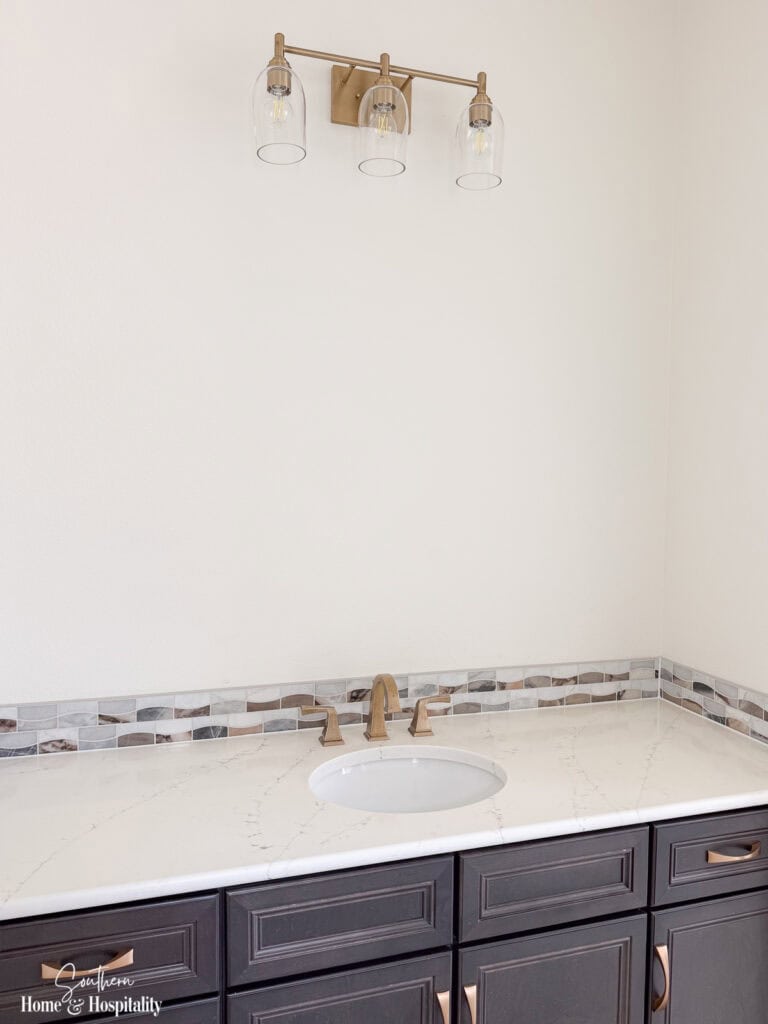
My friends already knew they wanted decorative mirrors in the secondary bathrooms, so paying for standard builder mirrors only to remove them later didn’t make much sense. Decorative mirrors can add so much personality. And if you already know you’ll replace them, why pay for them twice?
Cabinet Hardware.
After staring at fifty cabinet pulls in the design center, they can all start looking alike. And you may not even really like a one of them. But don’t fret. Cabinet hardware is one of those upgrades that’s so easy to change.
In this new home, the builder required the same hardware throughout the entire house, but they had already fallen in love with a different style for the primary bathroom. Rather than settling for one option everywhere, they went with the one they needed the most of (the kitchen). They made sure the hardware would have the same hole pattern and plan to replace the bathroom’s with the pretty acrylic and brass pulls they really want after they move in.
Light Fixtures.
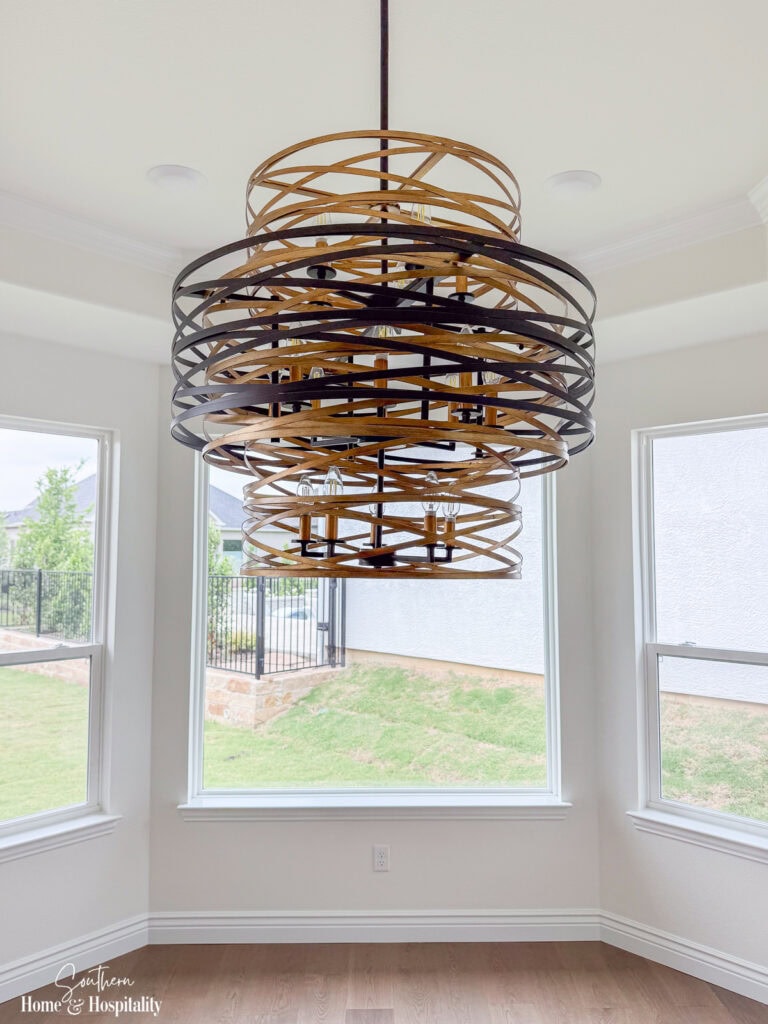
This might be the easiest decision in the whole post. I’d almost always wait on upgraded decorative light fixtures unless you really love what the builder offers. Besides, builder lighting packages can sometimes have a bit of a “builder-boring” look.
Dining room chandeliers, pendant lights, and bathroom vanity lights are all fairly straightforward to replace later, and your choices won’t be limited.
Living in the house for a few weeks also gives you a better feel for the size, style, and amount of light each room really needs before you start shopping.
Wallpaper, Paint, and Other Decorative Finishes.
If you’ve been reading Southern Home & Hospitality for very long, you already know I’m a big believer in decorating a home over time instead of feeling like everything has to be finished on day one.
Paint and wallpaper can completely change the personality of a room, and I actually think they’re easier to choose after you’ve lived in the house for a while. You’ll know how the natural light changes throughout the day, how each room is used, and what direction your decorating style naturally wants to go.
Some of my favorite projects have happened years after move-in day. There’s something fun about letting a home evolve instead of feeling like every room has to be magazine-ready from the beginning.
Make Your Home Work for the Way You Live.
One thing I’ve enjoyed most about watching this new build is seeing my friends think beyond the builder’s standard floor plan. Builders have to create homes that work for thousands of people. But you have the opportunity to create one that works for you.
Don’t Be Afraid to Reevaluate the Standard Floor Plan.
Some ideas seem completely obvious once someone else thinks of them first.
For example, my friends’ floorplan had a linen closet in the primary bedroom outside the bathroom. Instead of keeping it as a storage closet as the builder designed it, they turned it into closet space for the husband because that’s what they’ll actually use.
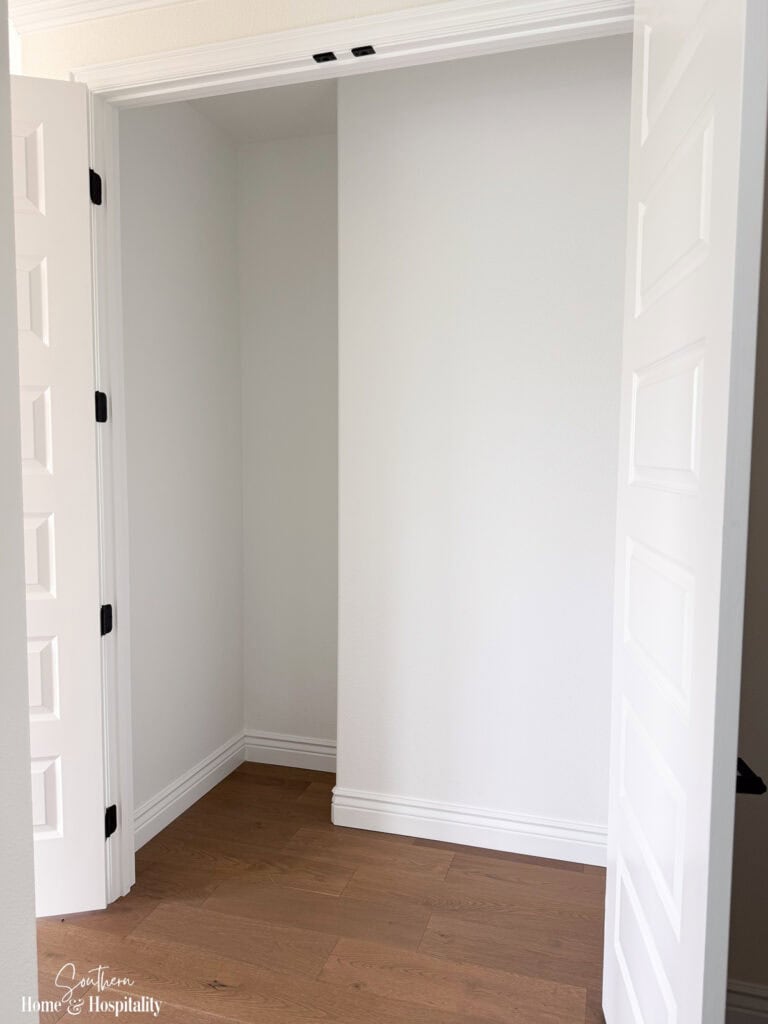

One of my other favorite ideas of theirs is to add a pass-through from the primary closet directly into the laundry room since the rooms share a wall. It’s a genius idea that made me think, “Why don’t more houses have that?” The builder wouldn’t make that change so they plan to make the cutout after they move in.
Walk Through an Ordinary Day Before You Finalize Your Plans.
Before your selections are final, forget the dream home on move-in day for a minute.
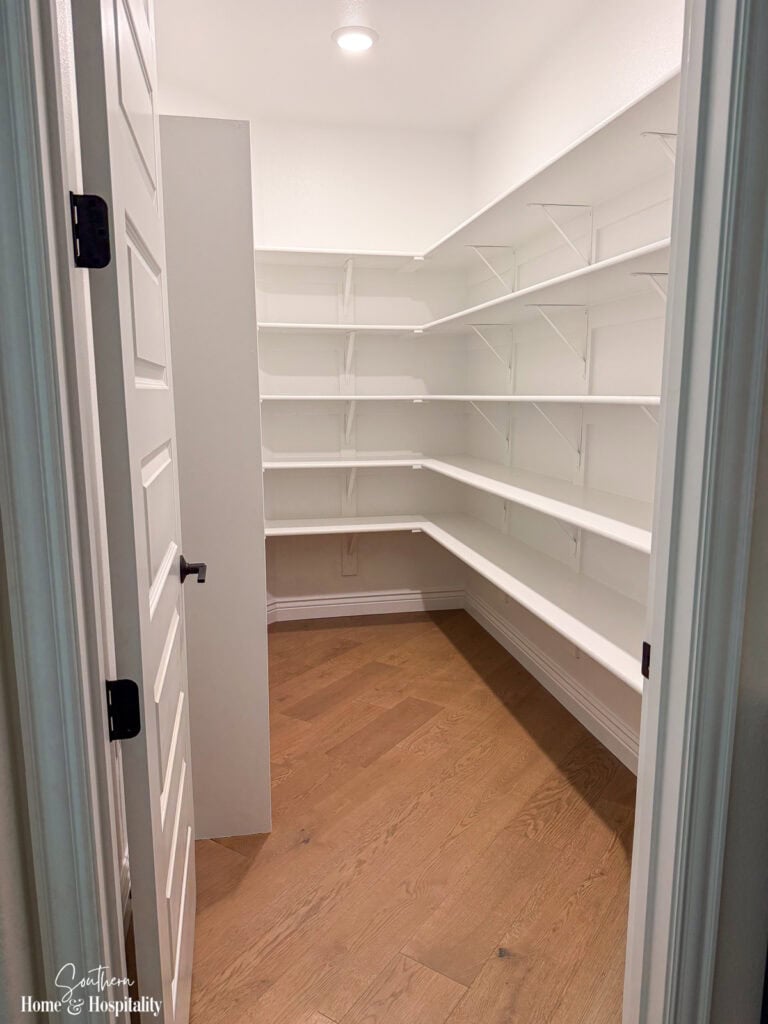
Instead, picture an ordinary Tuesday a year after the house is filled with your stuff.
- Where will you drop your purse, keys, and mail when you walk in?
- Where will the vacuum, broom, and other things you reach for all the time be put away?
- Where will small kitchen appliances go so they don’t take over the countertops?
- Will the laundry room and pantry actually work for the way you use them?
- Will furniture cover an outlet, and would USB-C outlets be useful where you naturally charge devices?
Little details like those aren’t visible in all those Houzz inspiration pictures you’ve saved, but they sure are the things you’ll appreciate every single day.
A Few More Ideas Worth Thinking About.
Not every one of these ideas belongs in every home, but they’re the kinds of things people often say, “I wish I’d thought of that.”
- Holiday lighting outlets under the eaves if you decorate every Christmas.
- A garage or laundry room outlet for a future refrigerator or freezer.
- A central vacuum rough-in if you think you might want one someday.
- An appliance garage if small appliances tend to collect on your countertops.
- Blocking inside the walls for future floating shelves, heavy mirrors, or a wall-mounted TV.
- A pathway for future wiring (conduit) to make adding new TV, internet, speaker, or other technology cables easier later.
Building a home comes with hundreds of decisions, and they all seem important in the moment. This New Home Build Series walks through the ones that can have the biggest impact long after move-in day.
- Part 1: How to Choose Finishes for a New Home (Without Regretting Them Later)
- Part 2: 15 New Home Design Regrets to Avoid Before You Build
- Part 3: (This post) Builder Upgrades Worth Paying For (And Which Ones Can Wait)
Frequently Asked Questions.
Which builder upgrades are usually worth paying for?
The upgrades that are hardest to change later are usually worth the most consideration. Electrical, plumbing, structural changes, and anything hidden behind the walls often cost much more to add after the house is finished than they do during construction.
Which builder upgrades are easiest to do after closing?
Cosmetic upgrades are usually the safest ones to postpone. Decorative mirrors, cabinet hardware, light fixtures, wallpaper, and paint are all projects that can be completed later, often for less money and with far more choices than what’s available through the builder.
Is it cheaper to upgrade with the builder or later?
It depends on the upgrade. Structural changes and anything that requires opening walls are often less expensive during construction. Decorative finishes, lighting, mirrors, and hardware are frequently better values after closing because you can shop around and install them yourself or hire a contractor when you’re ready.
It can feel like every choice has to be the final one before the house is even built. But soon enough you realize that’s not really possible—and it doesn’t need to be.
A few years from now, you probably won’t remember half the decisions you made in the builder’s design center. You’ll remember the things that make living in the house easier every day.
So the next time you hear, “That’ll be extra,” you won’t freeze with decision anxiety. Hopefully, you’ll simply ask yourself one question: How hard would this be to change later?
The best homes aren’t finished the day you move in. They keep becoming more like home a project at a time.

Before you go:
As always, I appreciate your visit, comments, and shares here on the blog! I’d love it if you also follow along with me on Pinterest, Instagram, Facebook, TikTok, and YouTube so you won’t miss any of my inspiration and ideas.
Don’t forget to sign up for updates to keep in touch.
If you’re not already a member of the SH&H family, I’d love to have you join me! You’ll not only get email updates, but you’ll have exclusive access to all the bonus materials in my free subscriber-only library, like this:
Pin it to remember it!
If you’ve enjoyed this post, please pin and share this on Pinterest: