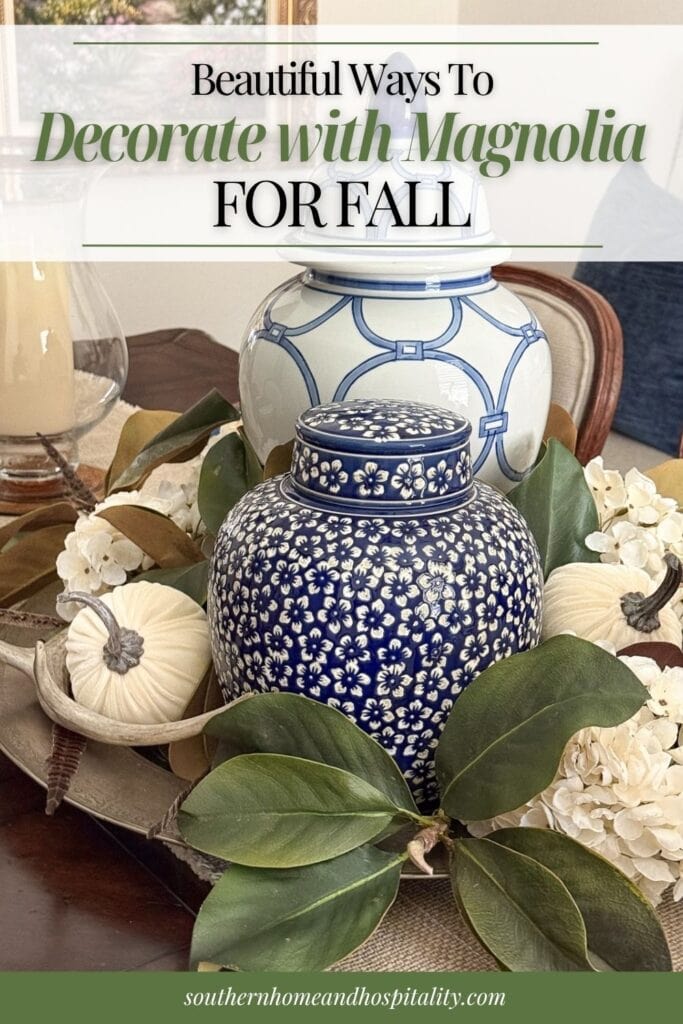

Beautiful Fall Decorating Ideas With Magnolia Leaves

Inside: Pretty ways to decorate with magnolia leaves for fall, plus what I’ve learned about using fresh, preserved, and faux leaves.
This post contains Amazon and other affiliate links for your convenience. As an Amazon Associate I earn from qualifying purchases. If you purchase something through any link, I may receive a small commission, at no extra charge to you. I only recommend products that I love or would purchase for myself. See my full disclosure here.
Some of my favorite fall decorating has started with a pair of clippers and a trip out to the yard.
Magnolia leaves have all the rich green and warm brown color I want this time of year, without screaming “fall decor!“. And if you have access to a magnolia tree, you sure can’t beat the price.
Over the years, I’ve used them every which way: fresh from the tree, dried, preserved, and faux when I want something I can count on looking the same all season.
One thing I’ve noticed is that magnolia works with almost any fall look. I’ve used it with orange pumpkins, dressed it up with brass and blue and white, and mixed it with feathers and deeper fall colors when I wanted something richer.
So I thought I’d pull together some of my favorite ways I’ve decorated with magnolia for fall, along with a few things I’ve figured out about using the real and faux versions.
Why Are Magnolia Leaves So Good for Fall Decorating?
Magnolia leaves almost seem made for fall decorating. Their glossy green tops and velvety brown undersides give you two colors in one leaf, and both look right at home with pumpkins, dried flowers, feathers, brass, and other fall favorites.
And maybe it’s the Southerner in me, but magnolia just seems to belong this time of year. It has that classic Southern look without making the house feel like fall has taken over.
They also work from the first hint of fall all the way through Thanksgiving. Early on, I can let more of the green sides show, then turn a few leaves over when I want to bring in more of those warm autumn browns.
Simple Ways to Decorate With Magnolia Leaves for Fall.
Run Magnolia Leaves Down the Center of a Fall Table.
For a long dining table, fresh magnolia clippings make an easy centerpiece because you can just lay them down the middle and keep layering until you’ve covered as much of the table as you want.

For this Thanksgiving table, I started with the runner, pumpkins, and brass candlesticks, then layered in fresh magnolia along with oak branches and other clippings from the yard. The large magnolia leaves gave the centerpiece some fullness, while the different leaf shapes kept all that greenery from becoming one long solid mass.

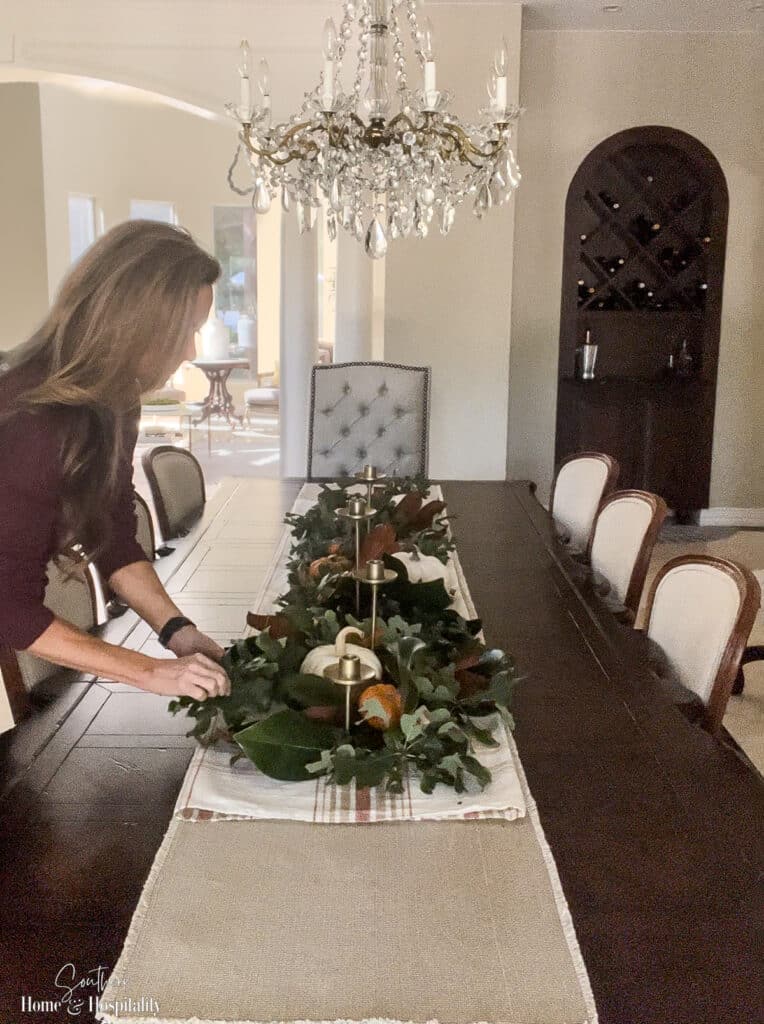
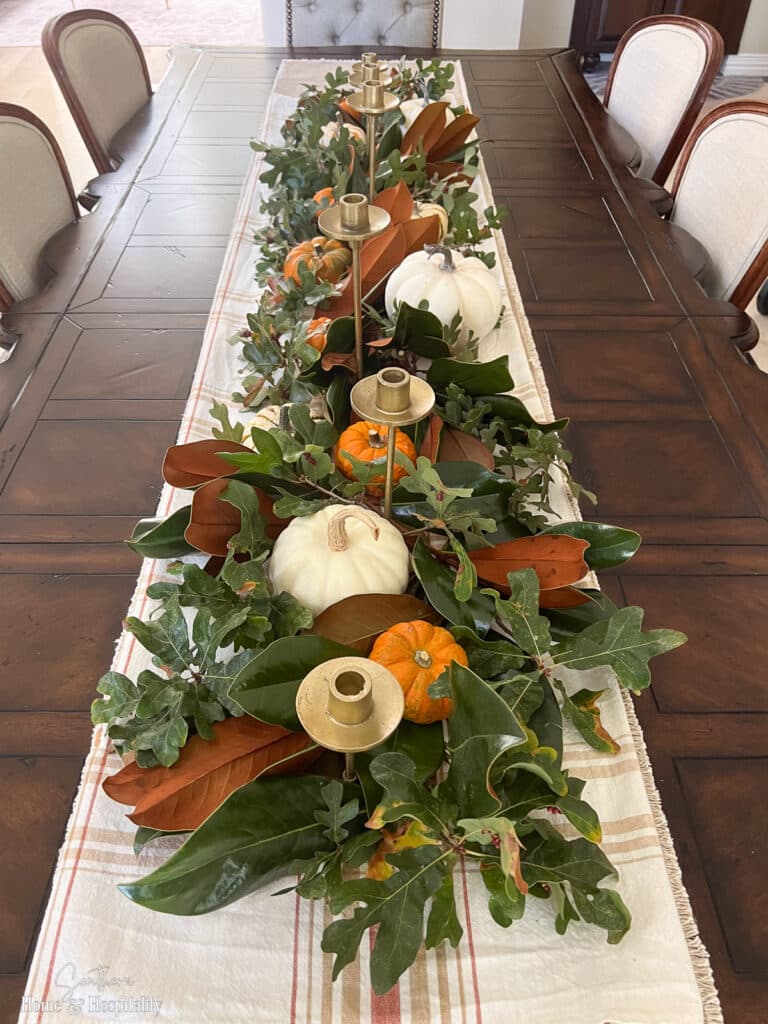
There’s no need to wire the branches together or make an actual garland. I just overlapped them, letting some branches wander out a little farther than others, and used the pumpkins and candlesticks to hide the cut ends.
Once the greenery was in place, I tucked in dried hydrangeas and pheasant feathers. This is where using whatever I can find in the yard tends to work in my favor. Different shapes and textures make the arrangement more interesting, and there’s no worrying about whether everything matches.

I turned a few magnolia leaves over, too, so those rusty brown backs would show. That little bit of brown warmed up all the green and tied in nicely with the pumpkins, wood, and brass already on the table.

Want to see exactly how this table came together? See Cheap & Easy Thanksgiving Table Decor: Stunning Centerpiece Idea in Minutes for the full step-by-step.
Layer Magnolia Into a Coffee Table Centerpiece.
Magnolia doesn’t have to be the star. Most of the time I just tuck a few leaves into a fall arrangement to fill in around everything else.
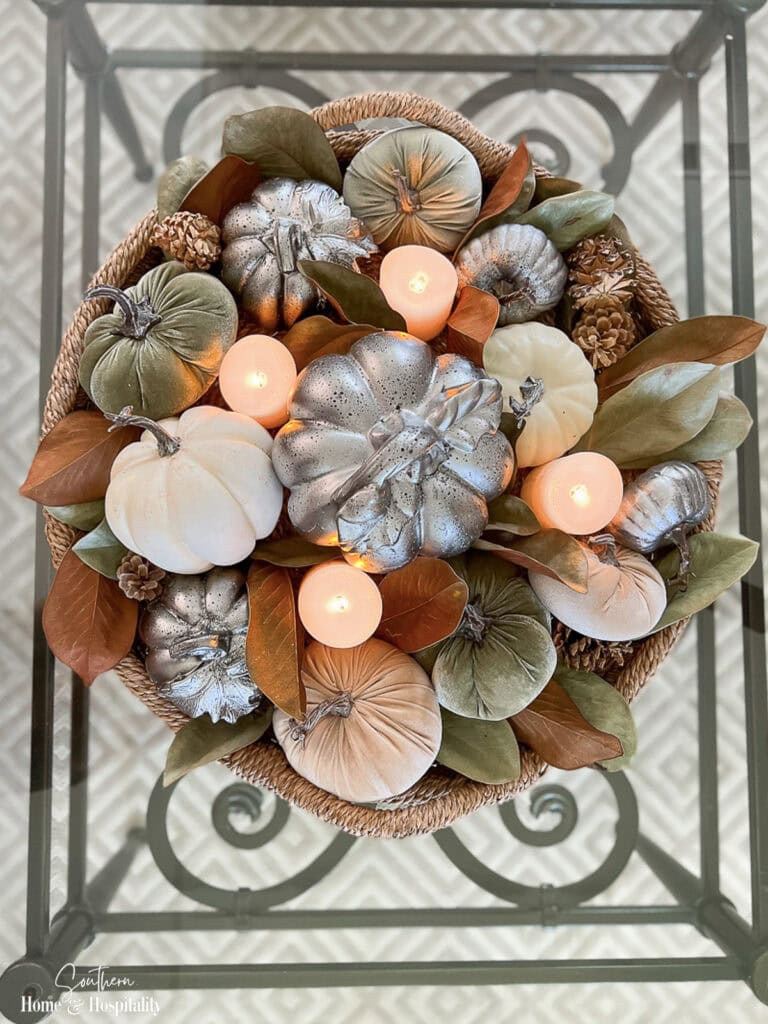
For this coffee table centerpiece, I mixed some of the real magnolia leaves I had treated with Mod Podge with velvet and metallic pumpkins, pinecones, and candles. By this point, the leaves had dried and faded to softer greens and browns, and I actually liked them better with these fall colors than I would have if they’d still been bright, glossy green.
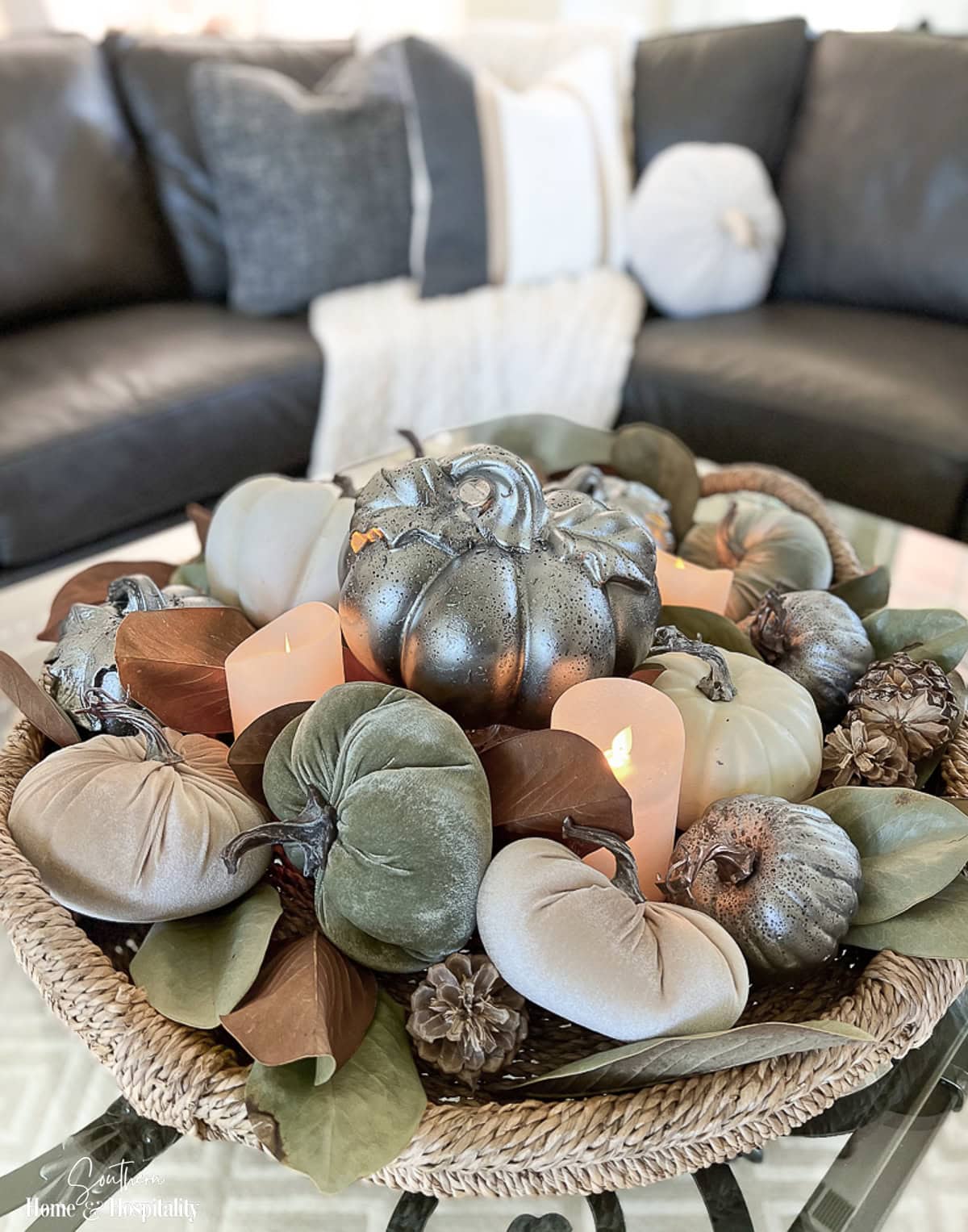
They certainly didn’t look freshly cut anymore, but that didn’t matter here. The slightly aged leaves fit right in with the pumpkins and pinecones and added another texture that blended right in with everything else.
I’ll show you later what happened with my little Mod Podge experiment, because it definitely didn’t preserve the leaves quite the way I’d expected.
Want to see how I put this centerpiece together? You can find all the details in my post Style a Stunning Fall Coffee Table Centerpiece in Five Minutes.
Mix Magnolia Leaves With Blue and White.
I have some blue and white in my home throughout the year, and since blue isn’t exactly a traditional fall color, magnolia helps bridge the gap.
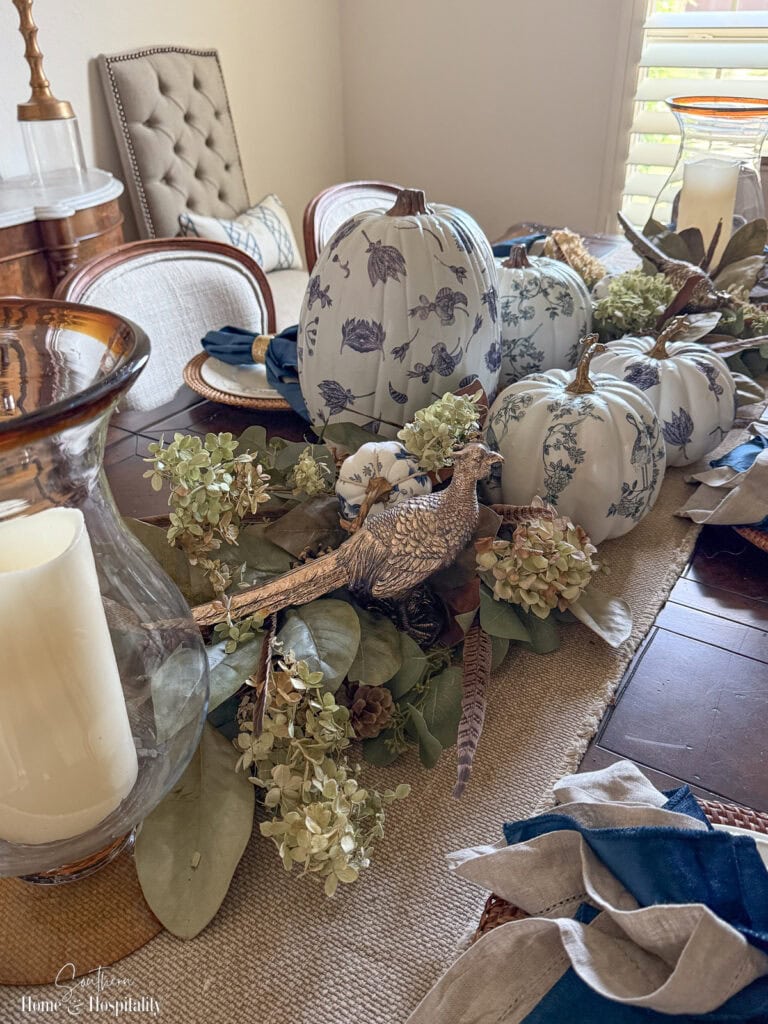
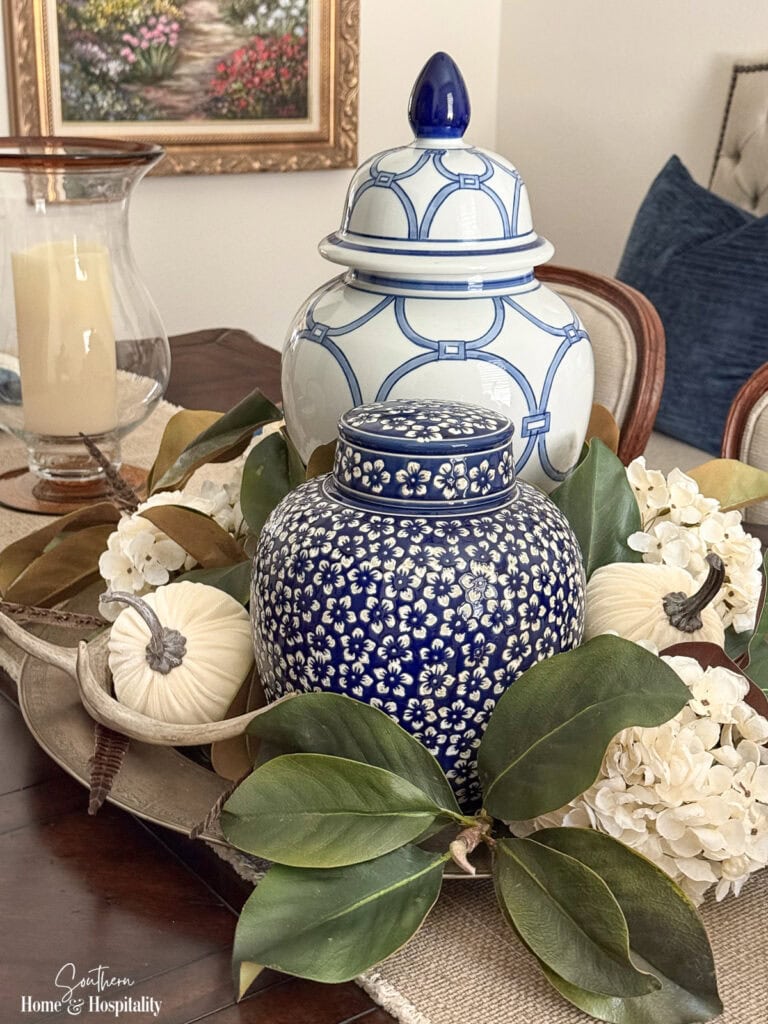
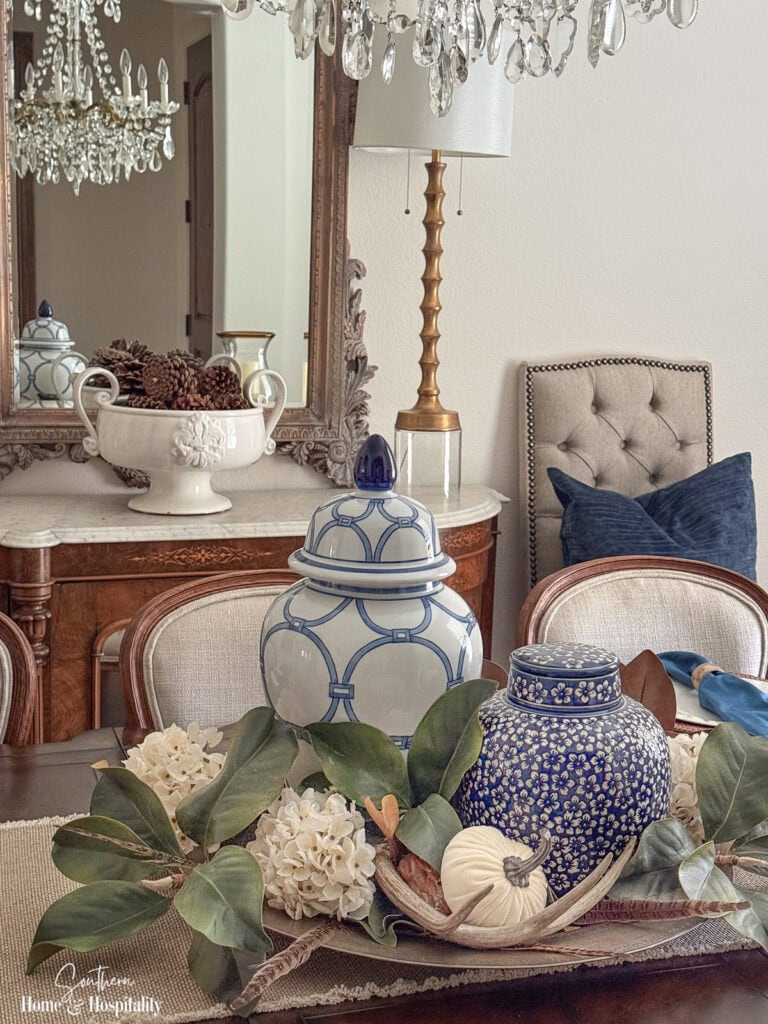
For this Thanksgiving table, I mixed magnolia with blue and white chinoiserie pumpkins, then added dried hydrangeas, pinecones, and feathers. Those few natural touches were really all it took to make blue and green feel right for the season.
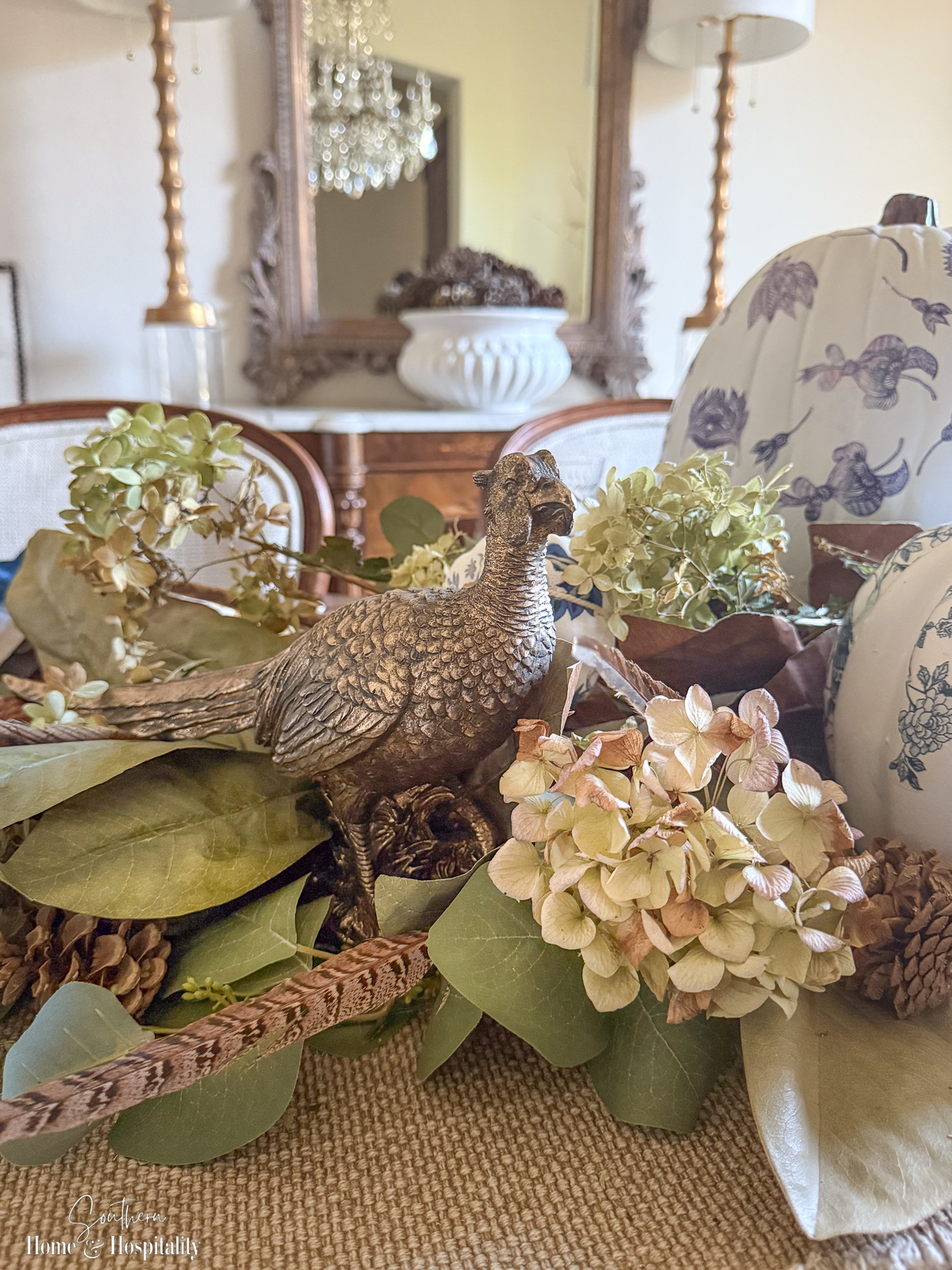
I especially like this combination for early fall, when I’m ready for a change but not necessarily ready to cover everything in orange pumpkins. There’s really no reason to put away the colors you already love just because the calendar says fall.
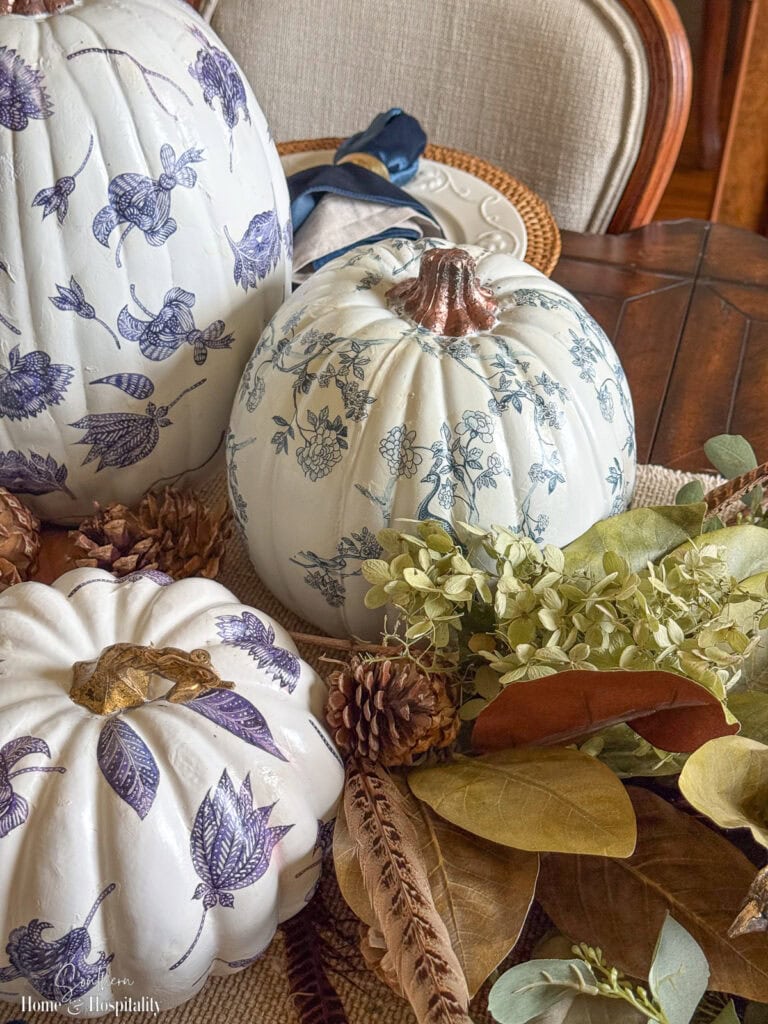
Want to see more of this table? I shared all the details in my Blue and Green Thanksgiving Tablescape, including how I gave it a fall look without relying on the usual orange.
Add Magnolia to a Bowl, Basket, or Tray of Pumpkins.
Magnolia is great for filling in around pumpkins, especially when one lonely pumpkin looks a little lost sitting in a bowl or tray.
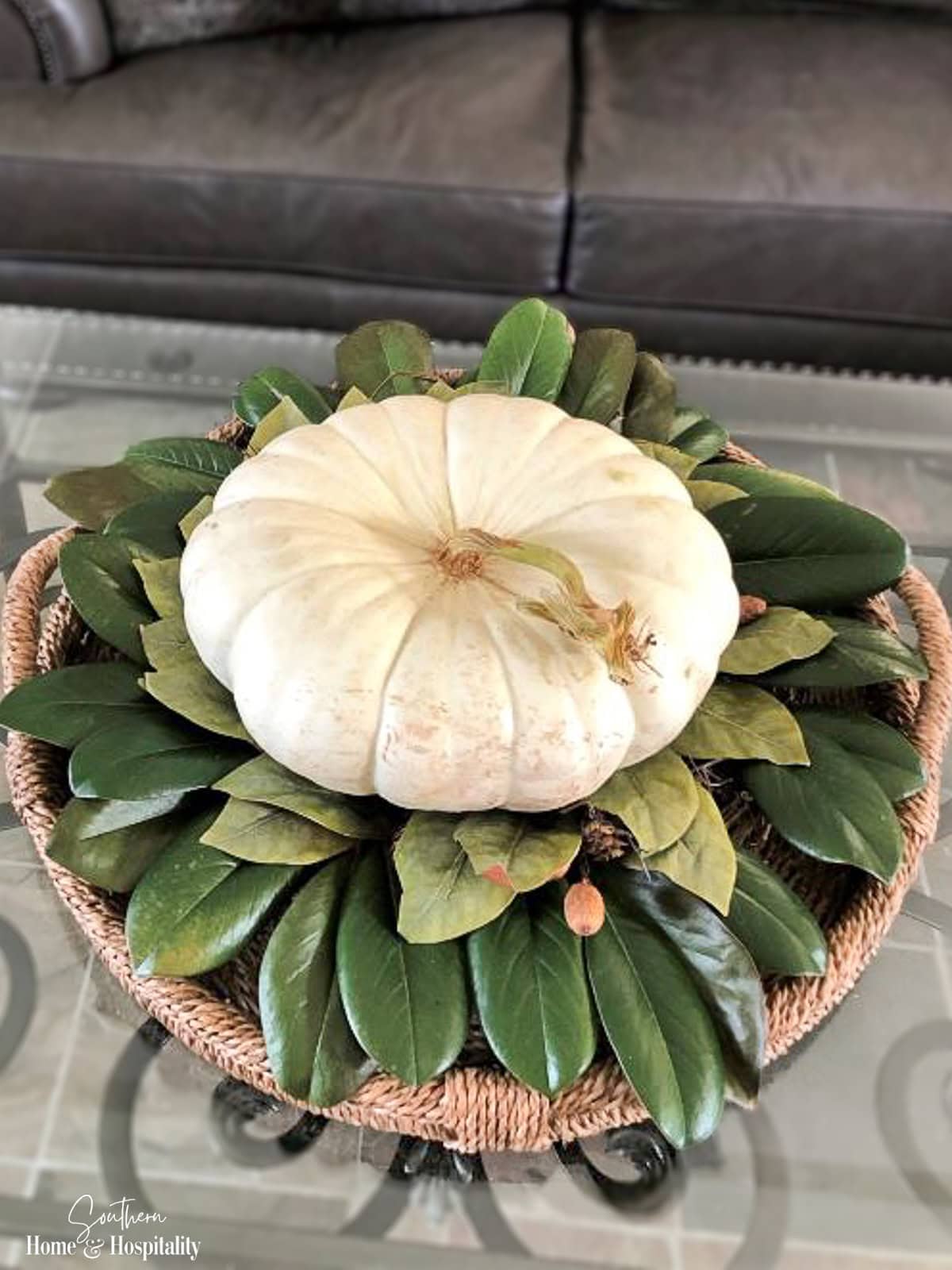
On this coffee table, I set one large white Cinderella pumpkin on a faux dried magnolia candle ring, then tucked fresh magnolia leaves around it to fill the woven tray. Suddenly that one pumpkin was enough to make a substantial centerpiece.
And here’s a little shortcut I use when I don’t have lots of fresh magnolia: put the faux underneath where you need the fullness and save the fresh leaves for the places where they’ll actually show.

The same idea can look completely different dressed up for a dining table. Here, I used faux dried magnolia around a large white pumpkin in an urn, then added smaller pumpkins and feathers around the base.

And because apparently I wasn’t finished with the magnolia yet, I added a real leaf and pheasant feather to each green napkin. I turned the warm brown side up for one more little touch of fall color.
You can see the rest of my dining room, living room, and foyer in Elegant Fall Decorating Ideas That Don’t Involve Orange, with more ideas for bringing in fall color without relying on traditional orange.
Use Faux Magnolia Branches in a Vase.
Sometimes magnolia really doesn’t need anything else.
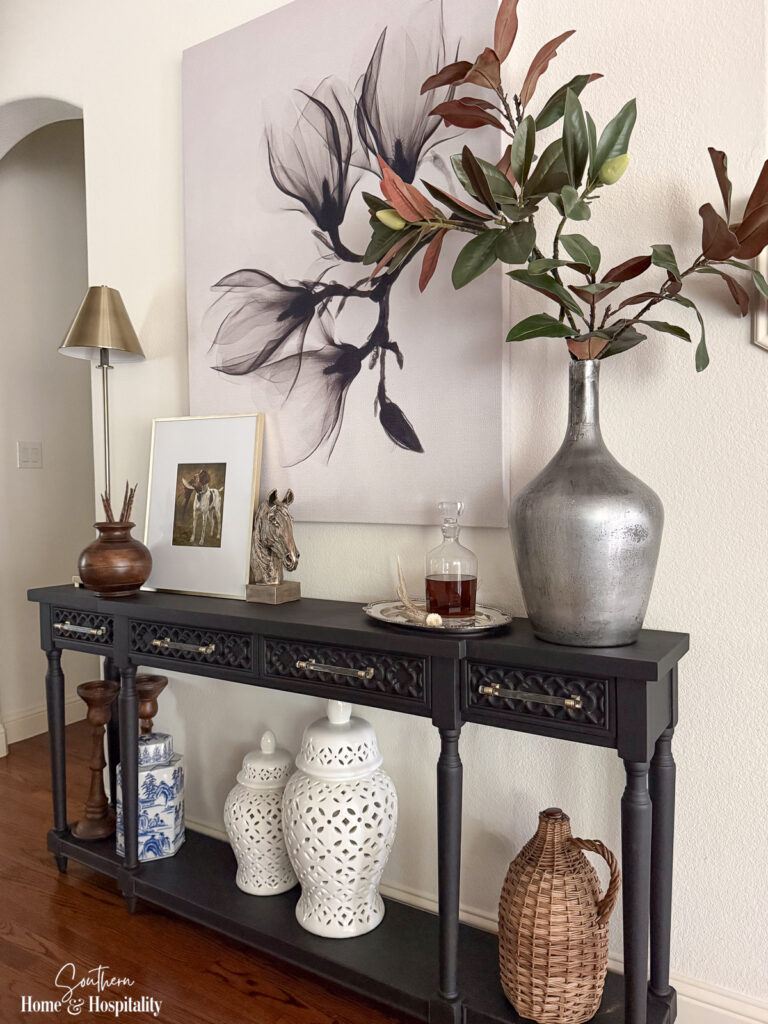
For my fall entry this year, I put a few faux magnolia branches in a large vase without adding any other flowers or greenery. The stems are tall and a little unruly, which I think is part of why they look more like something I could have clipped from a tree.
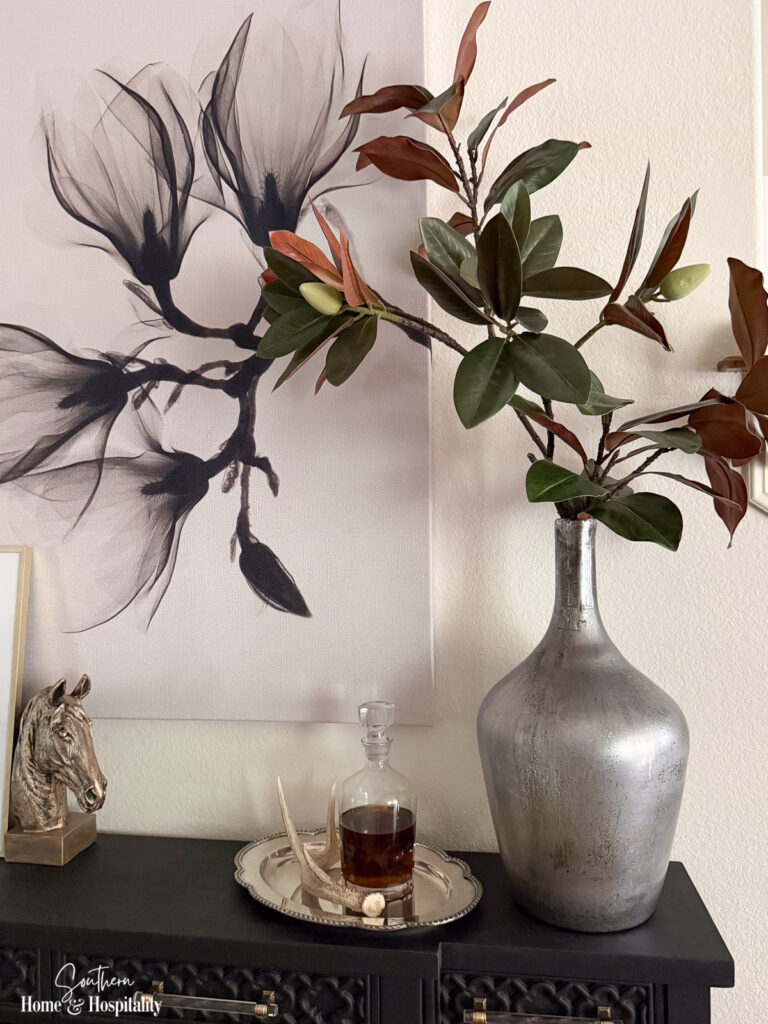
The big leaves fill up space nicely, so you don’t need many branches to make an impact. And because these are faux, I can leave them there all season without giving them another thought.
These magnolia branches were part of my Ralph Lauren-inspired fall decorating this year. You can see the rest in the post Ralph Lauren-Inspired Fall Home Tour: Classic Heritage Decorating Ideas.
Use Magnolia on a Fall Mantel.
Magnolia works just as well on a mantel as it does on a table, especially when you want the look of a loose garland without actually making one.
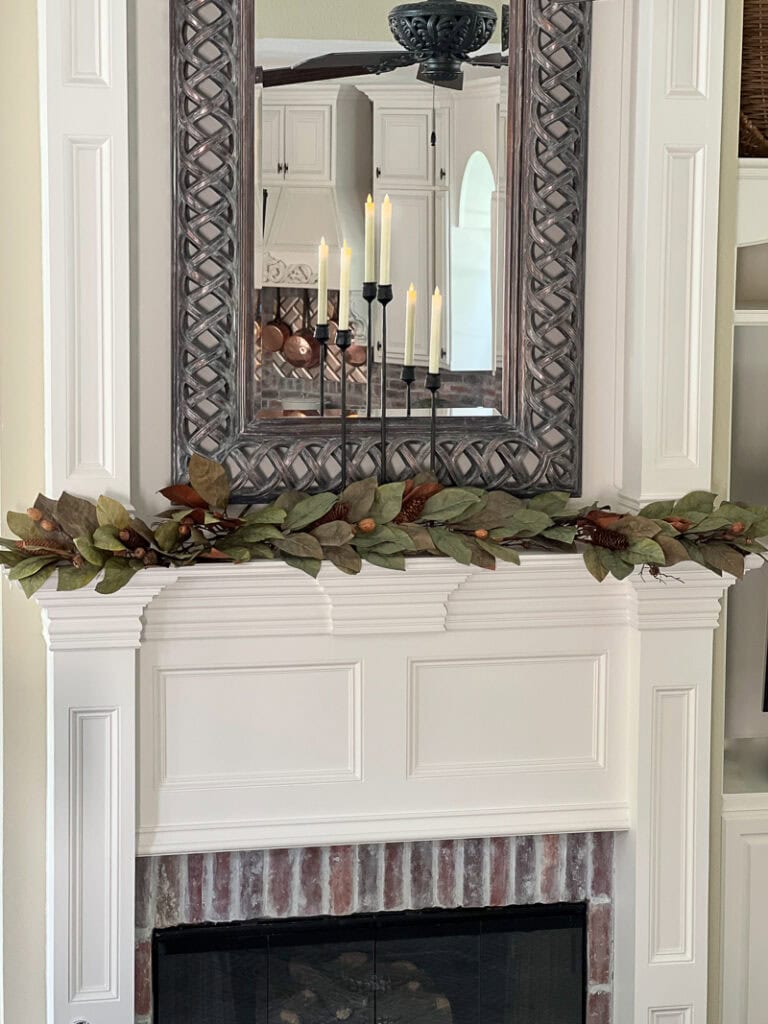
For this fall mantel, I used three faux dried-magnolia candle rings I already had. Instead of using them as candle rings, I opened them up, straightened them as best I could, and stretched them across the mantel, overlapping the sections until they looked like one long arrangement.
The smaller pieces were actually easier to work with than one long garland. I could tuck them into gaps, turn the leaves where I wanted them, and spread three little candle rings across a surprisingly large space.
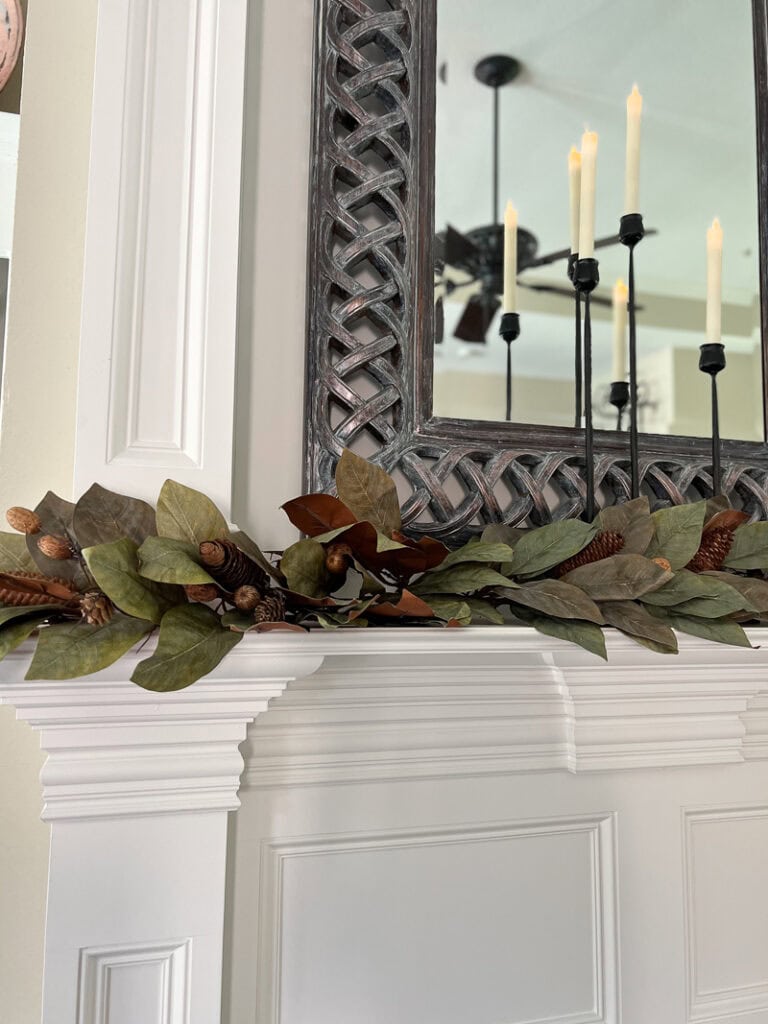
SH&H Tip: Don’t overlook faux wreaths, candle rings, and swags when you need greenery somewhere else. If they can be opened up or pulled apart without ruining them, you may already have exactly what you need.
Fresh, Preserved, or Faux Magnolia Leaves?
As you’ve probably noticed by now, I’m not picky about whether my magnolia is fresh or faux. I’ve used it freshly clipped from the tree, tried preserving real leaves, and collected quite a bit of faux magnolia over the years.
I had a magnolia tree at my previous home and got very spoiled being able to walk outside with the clippers whenever I needed a few branches. I don’t have one since downsizing, which has made me appreciate my faux magnolia a whole lot more.
Each has its place, and which one I use usually comes down to the look I want and how long I need it to last.
Fresh Magnolia Leaves.
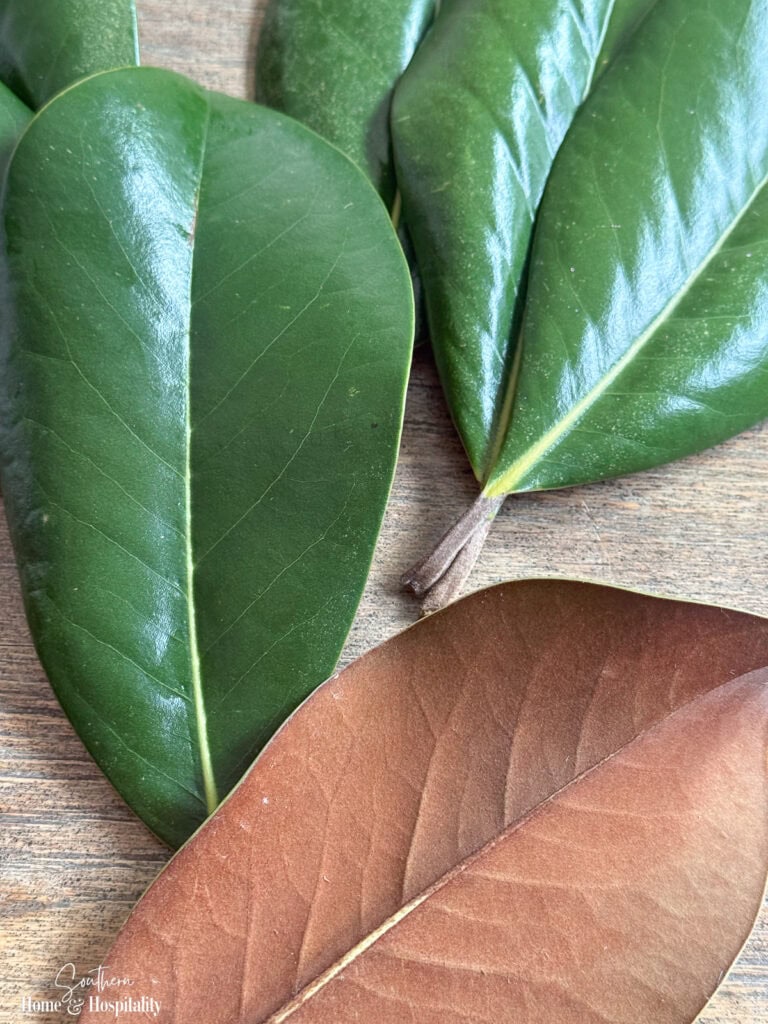
If you have access to a magnolia tree, fresh branches are hard to beat. They’re free, naturally a little irregular, and you get that beautiful combination of glossy green leaves and velvety brown undersides.
I especially like fresh magnolia when I need a lot of greenery, like the long Thanksgiving table earlier in this post. When I had my own tree, I could clip as much as I needed without spending a small fortune on faux stems.
The downside is that it doesn’t stay fresh forever. The leaves eventually dry, curl, and change color. That doesn’t necessarily bother me for fall decorating, but if you want those glossy green leaves to last for weeks, fresh magnolia isn’t going to do that.
Real Magnolia Leaves Preserved With Mod Podge.
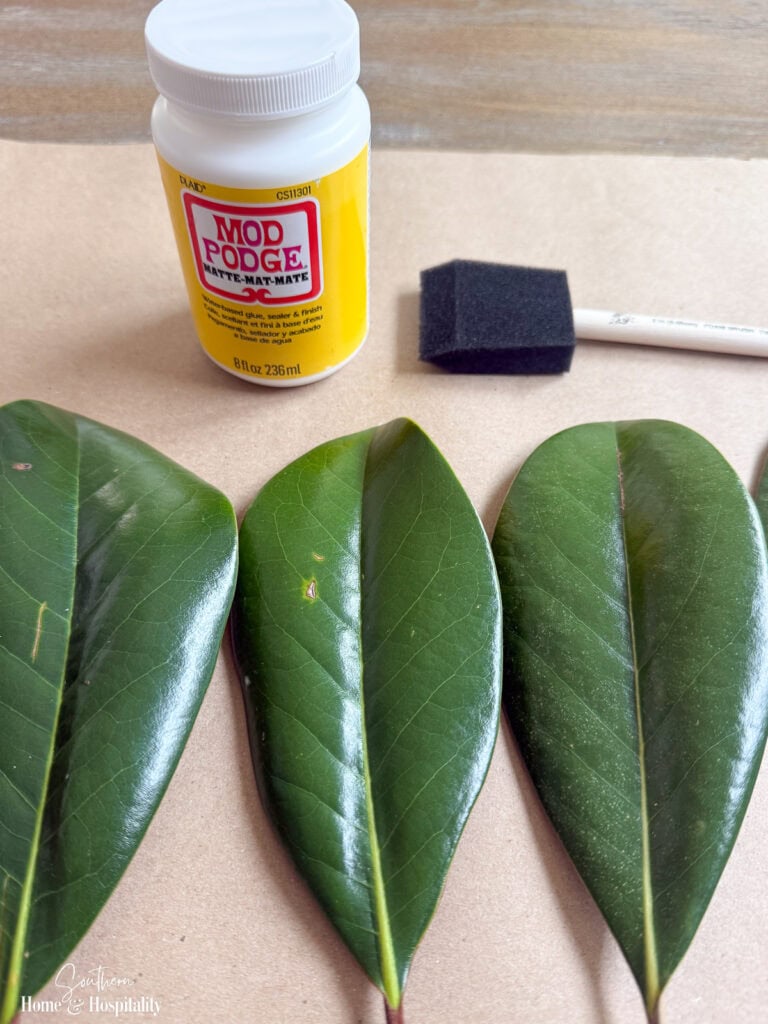
I also experimented with Mod Podge to see if I could keep fresh magnolia leaves looking green longer. I coated both sides with three coats of matte Mod Podge, letting each coat dry before adding the next.
And here’s where my little experiment didn’t turn out quite the way I’d hoped.
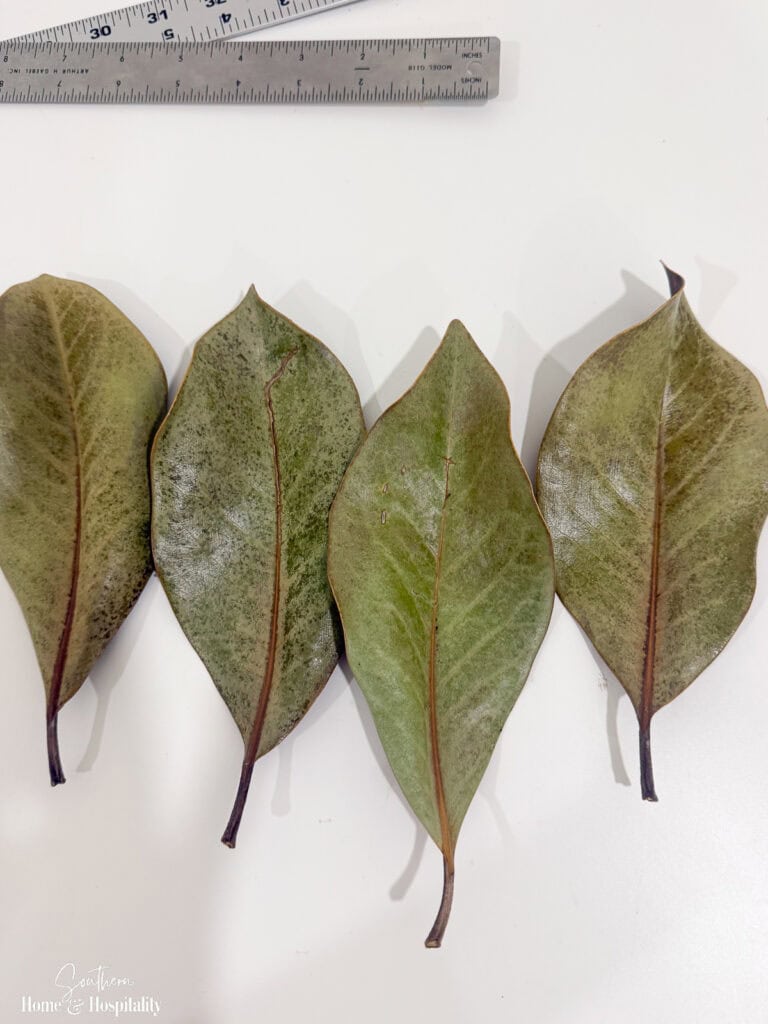
After about a month, the leaves still had some green color, but it had faded considerably. They were also dry and somewhat curled rather than soft and fresh-looking. The brown undersides actually held up better.
Would I recommend Mod Podge as a way to keep magnolia looking fresh and green? Not really. But I wouldn’t call the experiment a complete failure either. The leaves took on an aged look that works well for fall, and I’ve since used them quite a bit in my fall decorating.
If faded green and a little curling don’t bother you, they’re still perfectly usable. I just wouldn’t expect them to look like the glossy green leaves you started with.
Faux Magnolia Leaves and Branches.
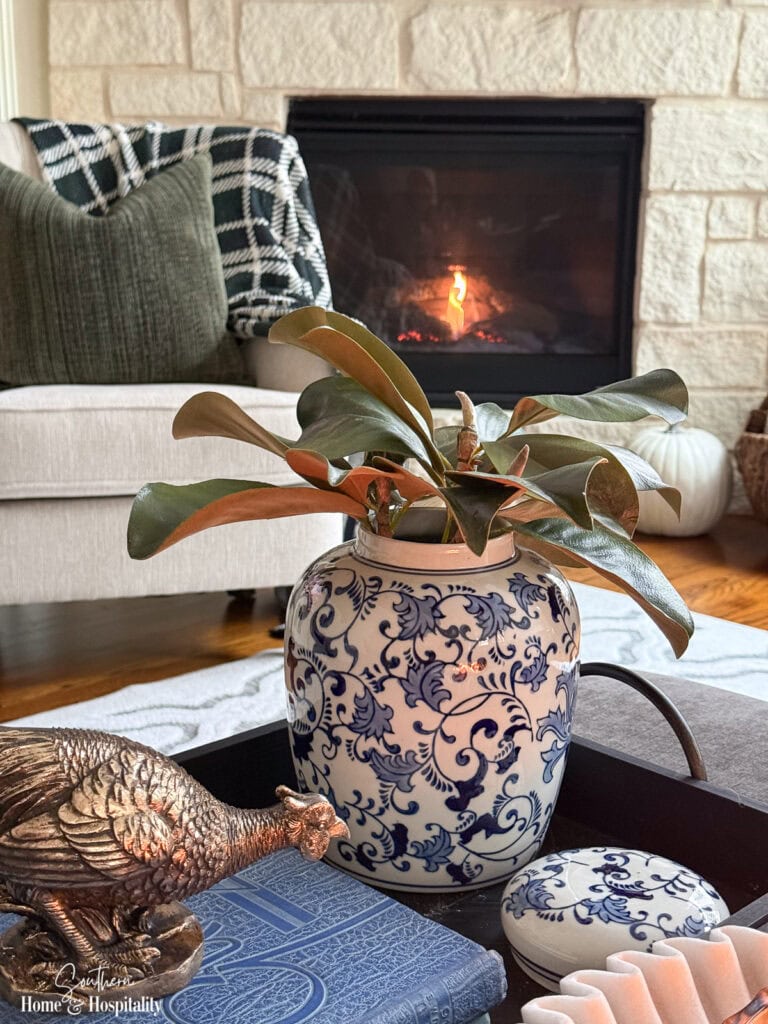
And then there’s faux magnolia. Some of mine is made to look dried, including those former candle rings you’ve seen throughout this post, while other pieces are meant to look freshly cut, like the branches in my entry this fall.
I’ve found that the most convincing faux magnolia has good-sized, fairly thick leaves. Some of my best actually came from an estate-sale arrangement I deconstructed. I also found a couple of decent tall branches at Hobby Lobby several years ago (although I haven’t seen them there lately).
I needed a little more to fill in this year, so I bought these faux magnolia stems from Amazon. They’re not quite as substantial as my estate-sale magnolia, but with a little shaping they blend in fairly well. I wired some onto the taller branches in my entry and mixed some into the dining table centerpiece you saw earlier.
Of course, the nice thing about faux is that it doesn’t change. I can arrange it once, leave it alone for the season, and pull it back out again next year.
How Do You Make Magnolia Look Natural in an Arrangement?
Whether I’m using fresh or faux magnolia, I don’t want every leaf pointing the same direction or every branch arranged just so. Faux magnolia does take a little extra work, though, especially when it comes flattened in a box. Here’s what I’ve found helps:
- Show both sides of the leaves. Turn a few so those pretty brown backs show instead of having every glossy green side facing forward. This works with both fresh and faux magnolia.
- Shape faux magnolia before you arrange it. Spread out the branches, bend the stems, slightly curl the leaves back, and turn the leaves in different directions. Most faux greenery looks pretty sad straight out of the box, but a few minutes of shaping can make a huge difference.
- Mix in different shapes and textures. Oak branches, dried hydrangeas, pinecones, and feathers break up all those big leaves and keep the arrangement from looking like one solid mass.
- Don’t make everything too even. Some branches can stick out farther than others, and both sides don’t have to match. That’s much closer to the way real branches grow.
Even though I don’t have a magnolia tree of my own anymore, I’ve obviously found plenty of ways to keep using those pretty green and brown leaves.
And I have a feeling there will always be a little magnolia somewhere in my fall decorating.

Before you go:
As always, I appreciate your visit, comments, and shares here on the blog! I’d love it if you also follow along with me on Pinterest, Instagram, Facebook, TikTok, and YouTube so you won’t miss any of my inspiration and ideas.
Don’t forget to sign up for updates to keep in touch.
If you’re not already a member of the SH&H family, I’d love to have you join me! You’ll not only get email updates, but you’ll have exclusive access to all the bonus materials in my free subscriber-only library, like this:
Pin it to remember it!
If you’ve enjoyed this post, please pin and share this on Pinterest: